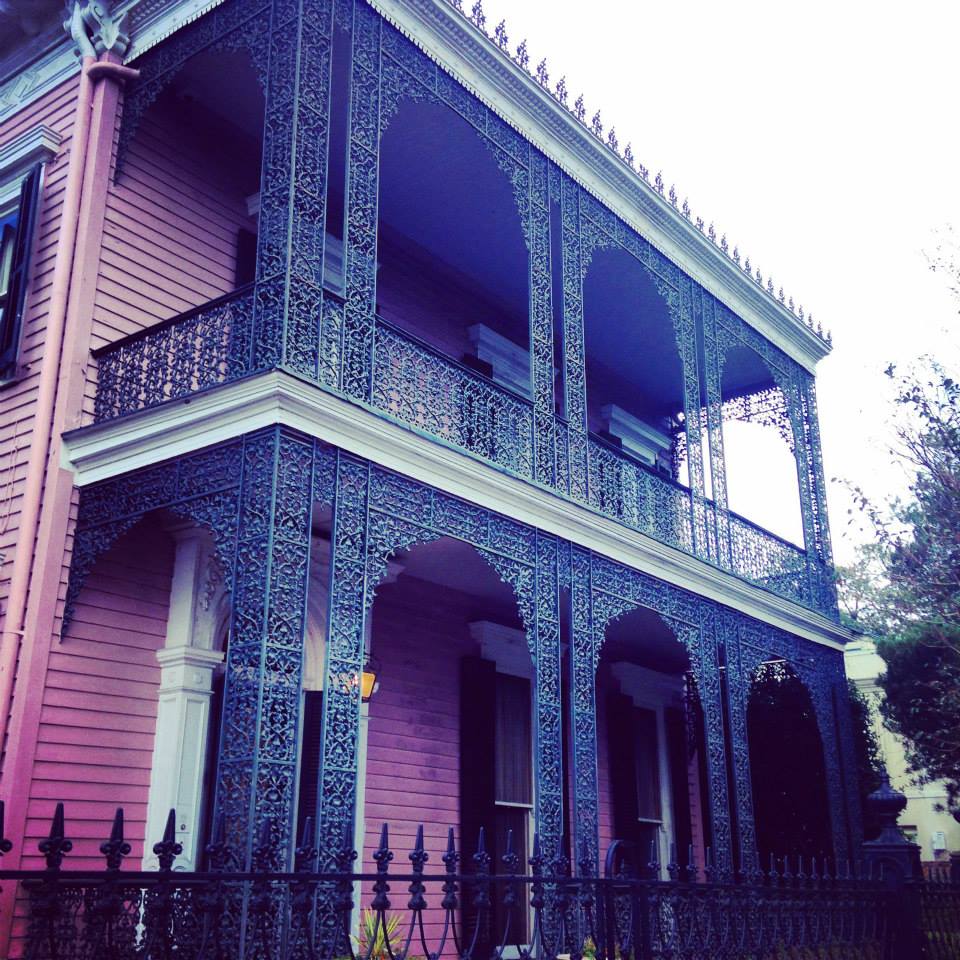
Lowcountry goes luxe at Palmetto Bluff

Written for MyCentralJersey.com and DailyRecord.com

With some of the best beaches in the country, combined with a laid-back, classic Lowcountry vibe, it’s no surprise that 2.5 million sun-hungry visitors flock to Hilton Head Island every year.

What many of these tourists don’t realize, however, is that there is a much friendlier and alluring hidden gem of a town less than 10 miles away.

Bluffton, South Carolina, on the banks of the May River, is filled with pre-Civil War homes, ancestral churches, locally owned restaurants and one resort community that has been rolling in praise while remaining understated.

Many resort communities have an aura of tackiness, filled with obnoxious colors, loud music and crowds. However, the Inn at Palmetto Bluff, a Montage resort, which contains an inn, cottages, cottage suites, vacation homes, a church, restaurants and a plethora of outdoor life bounded by the May, Cooper and New rivers, sets itself apart in a reposition of functioning as its own village.

This slideshow requires JavaScript.

Winding, quiet streets in a centuries-old maritime forest filled with live oaks and red cedars, the classic Southern homes in the Inn at Palmetto Bluff operate as a neighborhood with amenities and activities.

Palmetto Bluff certainly hasn’t gone without recognition. It was ranked in 2014 as the No. 1 hotel in South Carolina and No. 2 in the country by the U.S. News and World Report, as well as Conde Nast Traveler’s No. 1 resort in the U.S. and No. 11 resort in the world in 2013, among many other awards.

The accommodations, which feature touches such as vaulted ceilings, fireplaces and verandas with views of the surrounding Lowcountry, are priced from $1 million to $3 million for purchase and from $425 for a cottage stay that sleeps four to $1,170 a night for a village home stay that sleeps eight for rent.

Although this does price out many visitors, you don’t need to be a Palmetto Bluff guest to enjoy some of the resort features.

The accomodation at Palmetto Bluff include an inn, cottages, cottage suites and vacation homes. (Photo: Courtesy of the Inn at Palmetto Bluff, a Montage Resort)

Buffalo’s, a corner café open for breakfast and lunch across from the community chapel in Wilson Village, sits parallel to the May River, with a menu offering salads, sandwiches, pastries and bar items.

Other restaurants in the community include RT’s Market, a neighborhood general store, and the River House Restaurant, a farm-fresh eatery with a deep Southern feel.

Perhaps the biggest draw of Palmetto Bluff, however, isn’t what visitors can find indoors but what they can find outdoors in the 20,000 acres of the property. By hopping on a bike, horse or by foot, tourists can explore the Bluff trails or waterways by kayak, canoe or paddleboard.

While on the water, fishermen can drop a line for largemouth bass and bream, as well as saltwater fishing for tarpon, cobia, redfish and sea trout.
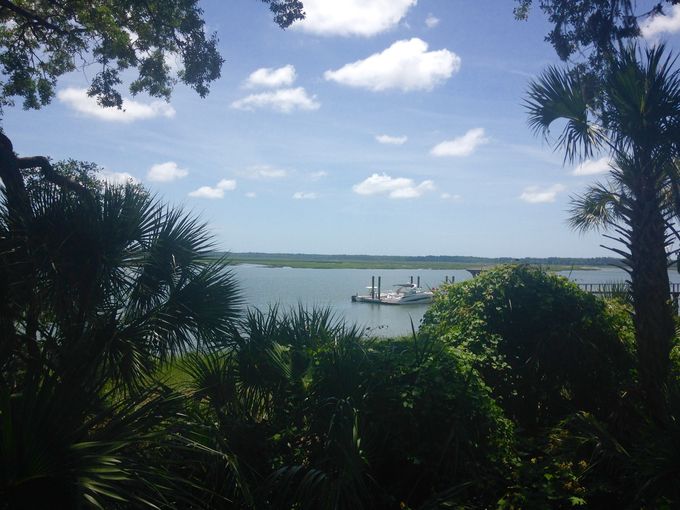
While on the water, fishermen can drop a line for largemouth bass and bream, as well as saltwater fishing for tarpon, cobia, redfish and sea trout. (Photo: Jenna Intersimone/Staff Photo)

Palmetto Bluff also houses a 1913 60-foot antique motor yacht that is one of the last remaining pre-World War I gas-powered yachts, restored and available for tours and private charter at any time.

Back on land, Longfield Stables is home to the community’s equestrian facility, a 173-acre farm surrounded by 15 miles of trails.

Besides getting a workout outdoors, visitors can also check out the Bluff’s fitness centers, movement studio, heated horizon lap pools overlooking the May River and award-winning day spa.

No resort community is complete without a golf club, and May River Golf Club, a par-72 course, holds sand from Ohio at Jack Nicklaus Signature Course along 7,200 yards running on the banks of the May River. Golfers of all skill levels in a state-of-the-art practice facility can play at the Bluff’s course, consistently ranked among the best in South Carolina.

Bluffton, South Carolina, right on the banks of the May River, is filled with pre-Civil War homes, ancestral churches, locally owned restaurants and one resort community that has been rolling in praise while remaining peaceful. (Photo: Courtesy of the Inn at Palmetto Bluff, a Montage Resort)

However, it’s not all about taking from the land — it’s about giving to it, too. The Palmetto Bluff Conservancy is a nonprofit organization that protects the natural resources of the property, funded by every home sale on the site.

To showcase and protect other forms of community beauty such as local artists, public art shows are also routinely held on the property in a medium that allows visitors to interact with artists, as well as blues, jazz, Southern rock, Lowcountry stomp and bluegrass artists and performers.

Although tourists looking for the laid-back, timeless feel of South Carolina tend to head to Hilton Head Island, a more genuine Southern experience can be found just a few miles away in Bluffton — and thanks to Palmetto Bluff, the same resort element of luxury found on the island can be found in the small town, too.

Palmetto Bluff

Where: 476 Mount Pelia Rd. in Bluffton, South Carolina, about eight miles from Hilton Head Island

Rates: Accommodations currently are priced from $1 million to $3 million for purchase and from $425 for a cottage stay that sleeps four to $1,170 a night for a village home stay that sleeps eight

Contact: montagehotels.com/palmettobluff/ or 843 -706-6500
Take mom to nation’s oldest seaside resort

The Jersey Shore gets a bad rap.

Whether it’s an Ocean Avenue full of beach rats, Seaside Heights full of rowdy teenagers or supposed dirty beaches, many have something bad to say about the famous coastline ruling the East Coast.

However, when we think of some of the biggest town names of the Shore — Wildwood, Belmar, Atlantic City — one place that tends to escape the list is Cape May.

For the same reasons that Cape May is set apart from the “typical” Shore town, it’s also an ideal Shore spot to bring mom as Mother’s Day creeps up on us this weekend and spring is in full bloom.

This slideshow requires JavaScript.

Walk Victorians that line streets

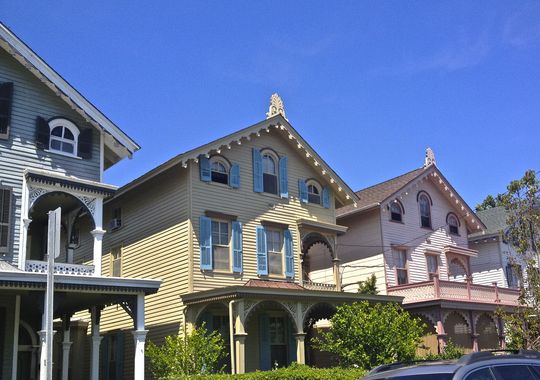
Unbeknownst to most weekend beachgoers, the entirety of Cape May is designated as a National Historic Landmark because of the concentration of Victorian buildings in the three-square-mile city. Instead of being roped off from tourists with entrance fees tacked on, people live in these 600-or-so homes and they make it count.

You can live in these homes for a brief time, too — take advantage of more than 30 antiquated bed-and-breakfasts in the Victorian district that ooze regality and charm. The historic bed-and-breakfasts often offer antique furnishings, gourmet breakfasts, afternoon tea and period features, bringing a stay not equated with most other lodgings on the Jersey Shore from about $125 a night.

If you wander through the shady, laid-back town, you’ll quickly notice that the colorful Victorian homes are adorned with elaborate gardens, eccentric details and people casually enjoying their tea on wrap-around porches. This makes the city feel very comfortable, lived in and real.

Don’t miss the Emlen Physick Estate on a leisurely walk, a Victorian house museum that will take you back to the era through the home’s architecture and décor throughout 15 restored rooms for $12 a person.

Take advantage of more than 30 antiquated bed-and-breakfasts in the Victorian district that ooze regality and charm and offer antique furnishings, gourmet breakfasts, afternoon tea and period features. (Jenna Intersimone Photography)

Lounge on some of best U.S. beaches

The city boasts the cleanest beaches around. It’s probably partially because the neat and tidy beaches, such as Higbee Beach or Poverty Beach, cost $6 a day, but nonetheless, the Natural Resource Defense Council has designated the 24 Cape May beaches one of its 38 cities of “Superstar Beaches” due to the quality of the water.

Although it may not be warm enough to swim during Mother’s Day weekend, the season doesn’t officially start until Memorial Day Weekend, meaning you can skip the $6 daily pass and simply enjoy the bright beaches and clean sand.

Also check out Cape May Point State Park, which is full of beaches, marshlands, an exhibit gallery as well as nature trails throughout its 235 acres. The park is also known as one of the best places in North America to view bird migration, making birding one of the most popular activities for outdoorsy visitors at the park.

You can also climb to the top of the Cape May Lighthouse for $8 a person at the park. Built in 1869, you’ll join the 100,000 people who hike the 199 steps to the top each year and get a stellar view of the end of the state, where Delaware Bay meets the Atlantic Ocean.
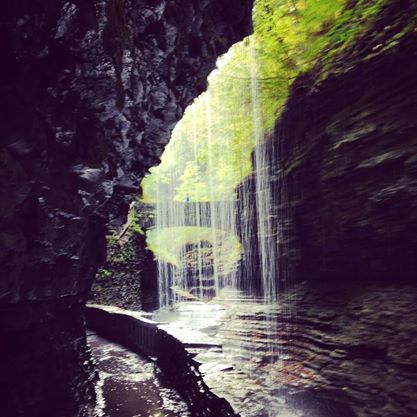
The Natural Resource Defense Council has designated the 24 Cape May beaches one of its 38 cities of “Superstar Beaches” due to the quality of the water. (Jenna Intersimone Photography)

Sample local food and wine

The Washington Street Mall, in the heart of the Victorian district in a walkable distance from the beach and most central bed-and-breakfasts, only contains shops that are privately or family owned and are a great stop for visitors to head to an ice cream parlor, café, restaurant or clothing boutique.

One of my favorite Washington Street Mall restaurants is A Ca Mia, which operates as a bakery, art gallery and Northern Italian restaurant inside a building constructed in 1872. Try the crab cake Italiano, oven-baked crabcakes with fresh crabmeat, peppers, spinach and pine nuts served with caper aioli and capellini in a tomato pesto sauce for $22 for one cake or $31 for two.

The Lobster House, on Cape May Harbor, is a great alternative to pricey seafood dining with the hometown, lazy feel of a boardwalk restaurant. With a modest price tag for outdoor seating, you can grab some menus, mark it up with friends and family, and head over to the bars to grab your crab cakes, clam chowder and oysters on the half shell at market price and enjoy them on the deck across the bay from million-dollar homes and yachts and plenty of gulls.

The Cape May Winery and Vineyard, about five miles from the tourist center of Cape May, can provide a $6 wine tasting cap to a seafood dinner from down the street. Sample wines throughout four vineyards from 70 acres of the property from one of the three tasting rooms or the wooden deck overlooking the vineyards.
The Lobster House is a great alternative to pricey seafood dining with the hometown, lazy feel of a boardwalk restaurant. (Photo: Courtesy of Ed Morlock)

With pastel Victorians and cool streets full of weeping willows, the city boasts wallet-friendly yet memorable family attractions that are ideal for a day trip or a long weekend by the beach to celebrate the number one woman in your life — mom.


CAPE MAY ATTRACTIONS

Emlen Physick Estate is a Victorian house museum which contains 15 renovated rooms that can be toured for 45 minutes for $12 a person at 1048 Washington Street and can be reached at 609-884-5404.

Bed-and-breakfasts in Cape May range from $160 to $400 a night for Mother’s Day weekend. Around 30 are throughout the city, most concentrated near the ocean and central Victorian district.

Higby Beach and Poverty Beach are popular Cape May beaches with a $6 entrance fee starting after Memorial Day Weekend.

Cape May Point State Park is full of beaches, marshes and an exhibit gallery off of Route 629.. It’s also widely known for its bird watching opportunities and can be reached at 609-884-2159.

Cape May Lighthouse contains 199 steps to the top and can be hiked for $8 a person at 215 Light House Ave and can be reached at 609-224-6066.

Washington Street Mall is an outdoor mall at 401 Washington St. full of cafes, restaurants, clothing boutiques and dessert shops located in the heart of the Victorian District.

A Ca Mia is a Northern Italian restaurant at 524 Washington St. in the Washington Street Mall and can be reached at 609-884-6661.

The Lobster House is an eat-in or take-out seafood restaurant at 906 Schellengers Landing Rd. on the Cape May Harbor and can be reached at 609-884-8296.

The Cape May Winery and Vineyard is a 70-acre winery that provides $6 tastings and tours at 711 Town Band Rd. and can be reached at 609-884-1169.

Things Get Weird at the Mutter Museum

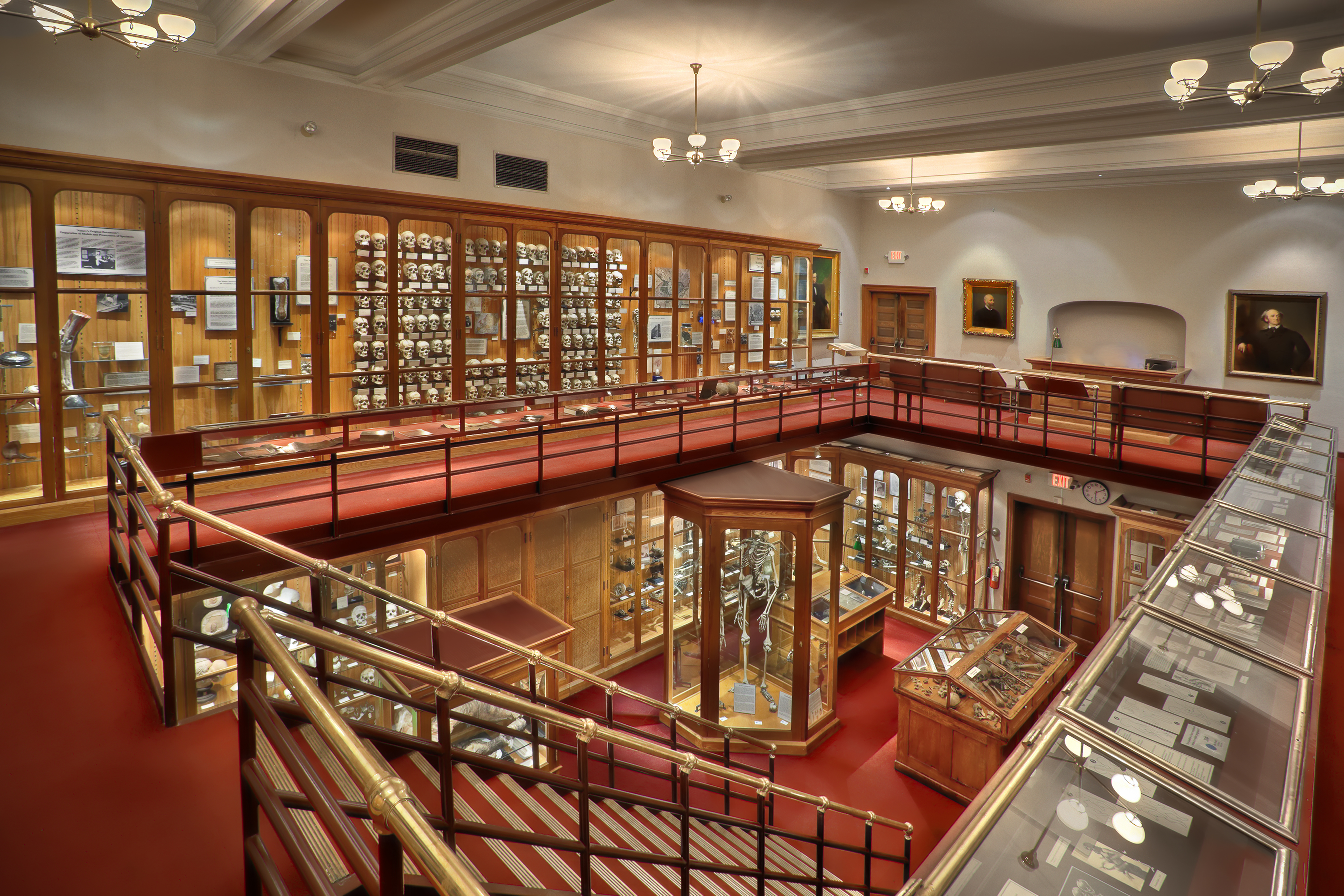
Being an unabashed fan of all things weird and creepy, I’ve always wanted to visit the Mutter Museum of the College of Physicians of Philadelphia, an internationally-renowned medical oddities museum that receives about 130,000 annual visitors and holds items such as Albert Einstein’s brain, a 139-skull collection and the tallest skeleton exhibit in America.

Photo courtesy of MutterMuseum.org

Unfortunately, I was under the false impression that I would never be able to visit in my young life due to the supposed fact that it was closed every Sunday and Monday, my and my male companion’s only off days due to our journalistic lifestyle. A prime example of why you cannot trust a boy to plan anything and an odd misunderstanding, he confused the Mutter Museum with the Mummers Museum of Philadelphia, which showcases “the tradition of Philadelphia mummery as a part of the celebration of America’s Bicentennial.” I have no idea what this means.

After working through this nonexistent obstacle, we headed to the Mutter Museum on a cold Sunday, named for Thomas Mutter who was a Fellow of the College of Physicians of Philadelphia and bequeathed 1,700 specimens to the College which became the core of the collection. Now sporting around 25,000 objects, the Museum enjoys international popularity and has been featured on various television programs.

One of the most immediately obvious permanent exhibits at the Mutter is the collection of 139 human skulls, all labeled nicely with their original owner’s name, method and time of death. In looking at the skulls, you realize that like an innocent fingerprint, no two are exactly alike.

Photo courtesy of MutterMuseum.org

If you begin your descent walking around the stuffed two-story museum, you’ll also probably quickly be drawn to some of the 1,300 wet exhibits, which hold body parts with some odd characteristics such as tumors, cysts and diseases like leprosy.

There are also several standout exhibits, such as the Mutter American Giant, who at 7’6″, is the tallest skeletal exhibit in America. Other malformed skeletons shown are the popular corset skeletons, which show how constrained corsets actually altered the skeletons of Victorian women and also damaged their internal organs. Plus, you can’t miss the eight-foot-long and 29″ circumference colon, which held 40 pounds of feces at the time of the original owner’s death and belonged to a man who was reported to go up to a month without a bowel movement.

Photo courtesy of RoadTrippers.com

During my visit, there were also two special exhibits going on, one being “Broken Bodies, Suffering Spirits: Injury, Death, and Healing in Civil War Philadelphia” which show what it was like to become wounded and be treated in the Civil War as well as what it was like to work as medical personnel in a time where medicine was obviously lacking. In this exhibit, popular Civil War-era medical myths are debunked, such as that there was no anesthetic (actually, only 3 percent of surgeries were performed without anesthetic) and patrons can also see what it would be like to have their arm amputated.

You’re probably reading this and thinking, “I’m so ready to donate my body to the Mutter Museum Philadelphians to gawk at for all of eternity.” Not so fast. The College must first decide that they need or want the donation and then the potential donor must finance their own harvesting and preparation, no cheap task.

Even if you choose just to be a visitor and not a donor, you won’t be disappointed on a lazy Sunday of what the world-famous Mutter Museum has to show. There’s no promises that it won’t follow you home with some nightmares, though.

Photo courtesy of MutterMuseum.org


THE MUMMER MUSEUM

Open daily 10:00 am to 5:00 pm

General admission $15

19 South 22nd Street, Philadelphia PA

(215) 563-3737

muttermuseum.org

The Realities of Work Travel

There’s work travel and then there’s work travel.

When we think of travel, we generally think of an undeniable, animalistic excitement – that which stinks of newness and possibility. For me, it’s that feeling that keeps me getting on plane after plane, punching in my credit card number several times a year.

However, travel isn’t like that for everyone. Some of us don’t get to get home because travel has forced us into a whole new one.

My friend was employed by a large sales company near our hometown following graduation, a great company at that with awesome pay and killer benefits. When she earned a promotion, she was informed that following a few months of training, she would be assigned a territory and she would have two weeks to move.

Upon moving to her new city, she was given a phone, an iPad, a laptop, a car, gas money, grocery money and a hotel to stay in for a few weeks until she was able to find a place to live. After a few weeks, she settled into a cushy luxury apartment in the city where she received her assignment. She has a walk-in closet and very impressive adult furniture. Not too shabby, right?

To me, her life is dreamlike. To be sent to a new, exciting city where one has no lingering ghosts. To make an enviable salary and live in a beautiful apartment. To buy your own groceries and make as much noise as you want and come and go as you please.

To someone who lives in a boring town without the means yet to move out, this is truly otherworldly.

Being as loudmouthed as I am, I eagerly conveyed my excitement to my friend. She couldn’t wholeheartedly agree.

“It’s kind of exciting at first,” she says. I listen to where she goes with this and I start to think. My friend can’t just pop over to a new, cool restaurant because she has no one to go with. There are not yet bars to frequent, friends to see or parties to go to because my friend doesn’t know one soul in the city. 

Any semblance of a life that she once knew is now gone, replaced by possibility, yes, but nothing solid in sight. In the long run, I’m sure it’s great. But when you’re bored on another Saturday night at home, now apt with possibility does this really feel?

This is true work travel.

And it also didn’t really occur to me when I was busy dreaming of what it would be like to go somewhere cool and nowhere near anyplace that I had ever been.

Travel is exciting. It’s fun and new and cool. But when you can’t go home, because you have been relocated in your travels, the novelty can wear off before a comfortable sense of familiarity can seep in.

IMG_8041

Chattanooga, Tennessee’s Forgotten Child

I am returning from Chattanooga today. No, not Nashville, because believe it or not, Nashville is not the only city in Tennessee. It’s Chattanooga. This fact is lost on many of the people that I inform of my travels.

Chattanooga doesn’t have a great reputation. One of the smaller Tennessee cities, it’s still ranked as the fourth most dangerous statewide city in 2013, in a state already named as the most dangerous one in the nation. Plus, when compared to its bright and sparkly sister, Nashville, it’s music scene nor tourism measures up.

Even though the hilly, quiet city is no international destination, it does have some character that distinguishes it from its famous neighbors such as Knoxville, Atlanta and Nashville. Chattanooga, reminiscent of the Meatpacking District of Manhattan with its lines of historical and refurbished warehouses, is marked by a rather exciting railway and mining history.

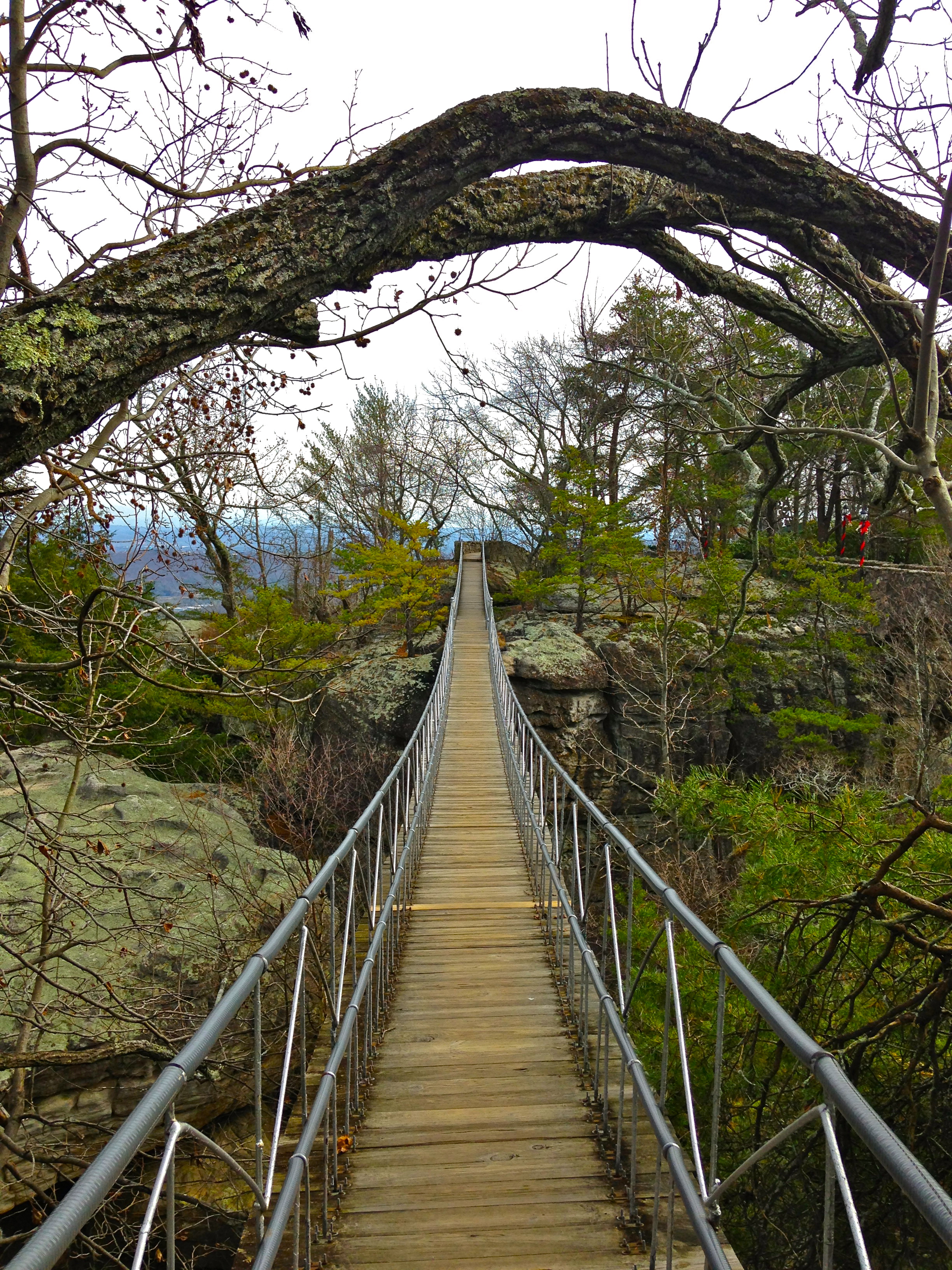
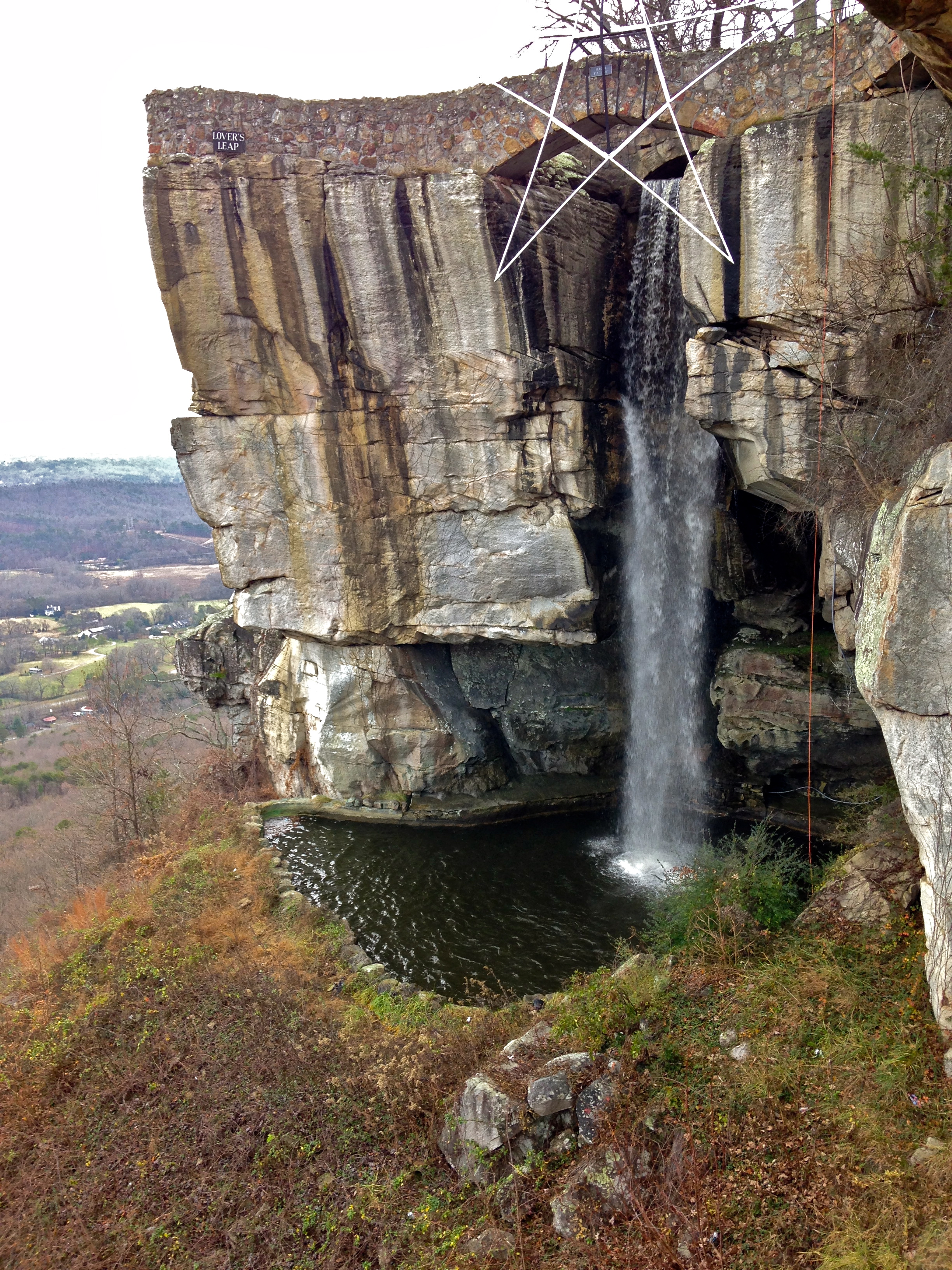
My friend who recently relocated to the city, the reason for my visit, took me to Lookout Mountain, a scenic city attraction and the epitome of the railway and mining reputation of Chattanooga. Made up within the mountain is the Incline Railway, Ruby Falls and Rock City.

Rock City's formidable peak.
Rock City’s formidable peak.

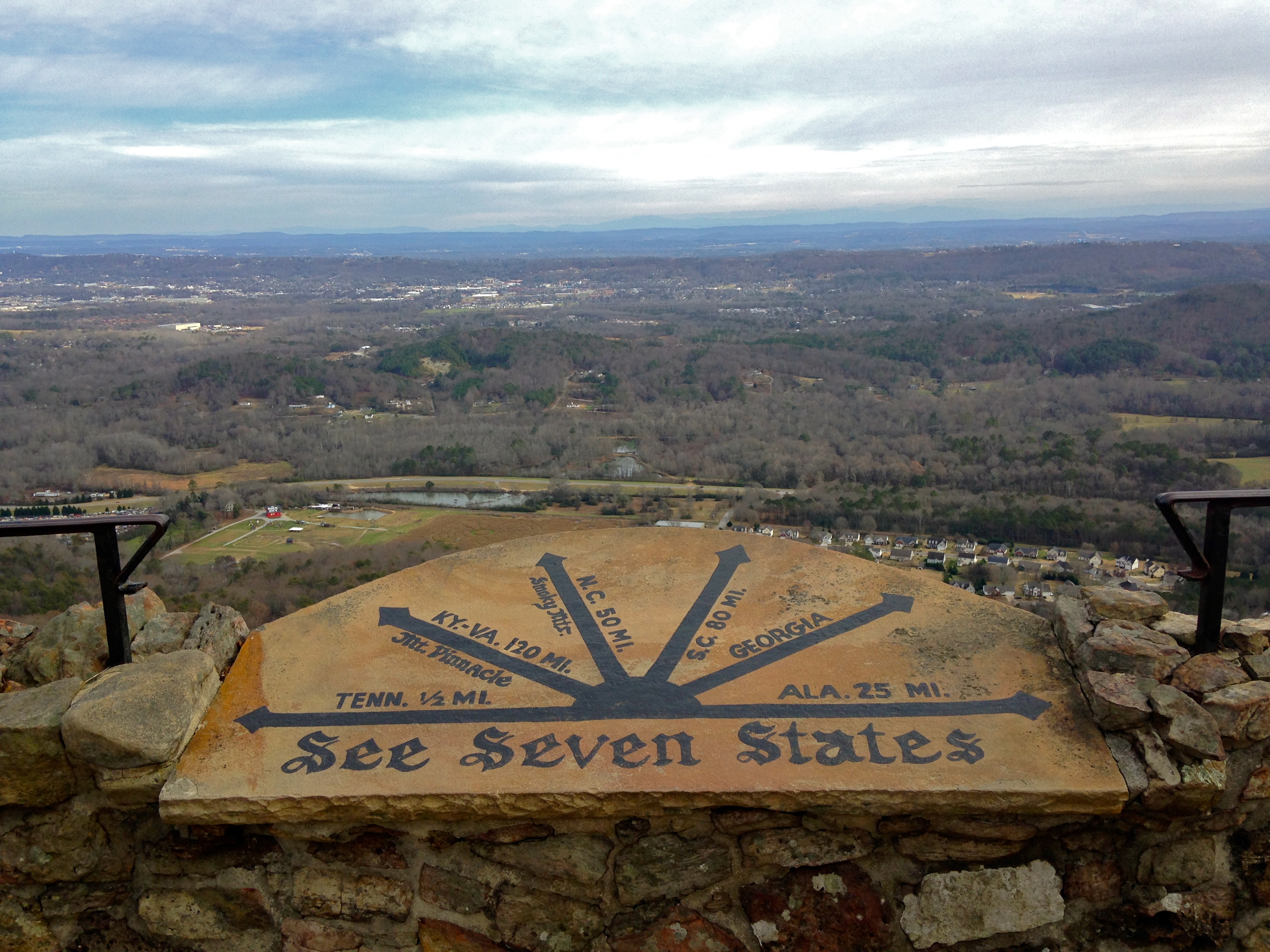
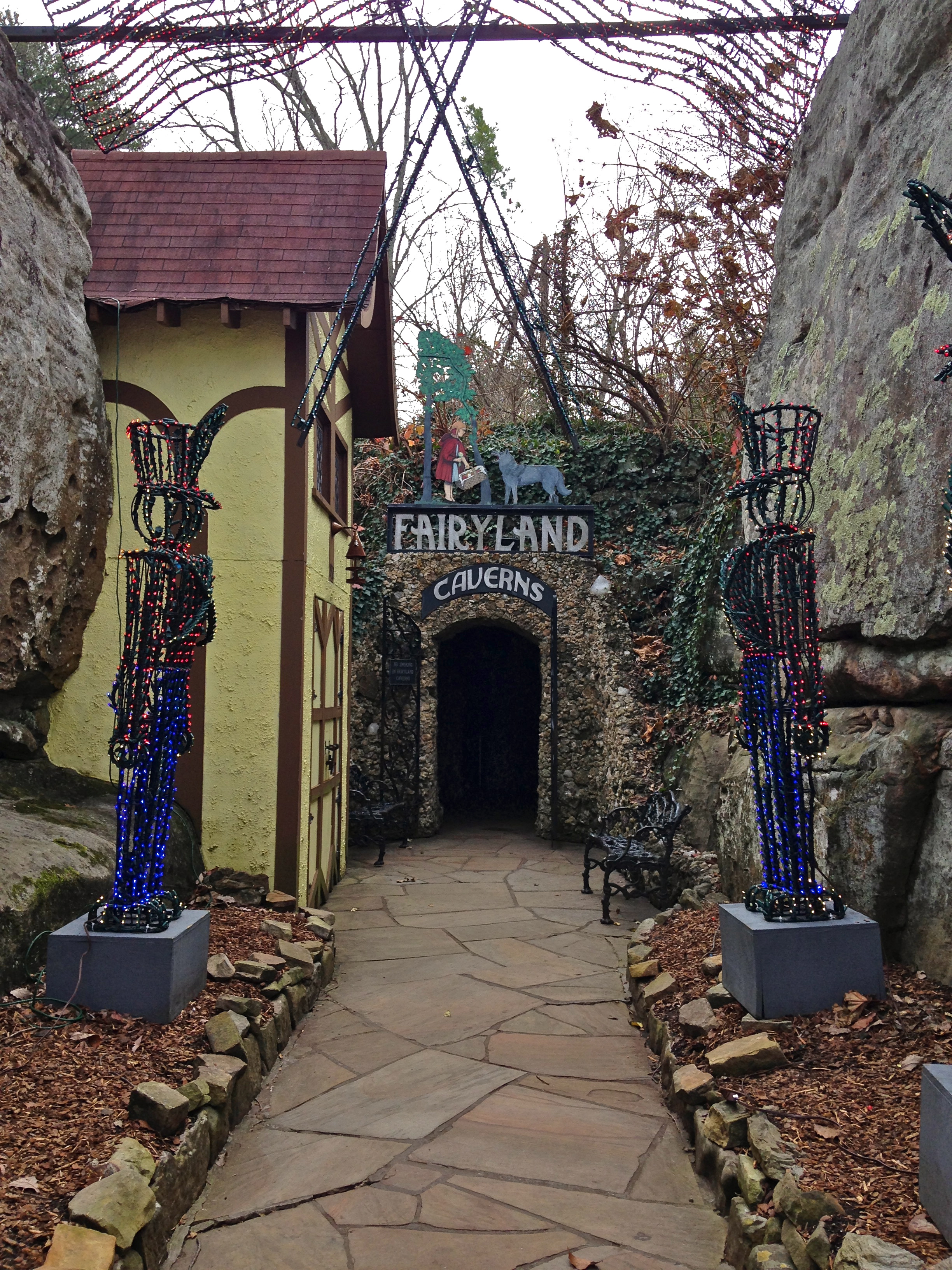
Rock City, the premier park that brings brings visitors up the 1700 feet above sea level that is Lookout Mountain, is decorated with various festive displays within its interesting rock formations and pretty peaks. The self-guided tour is easy and family friendly with some cheap thrills along the way, including one zookept albino deer, displays within the Fairyland Caverns and a spot where visitors can see seven states from its lookout point.

At the peak of Rock City, seven states are visible.

The highlight of Rock City is the Fairyland Caverns, a small cave system in which someone very meticulously created elaborate displays of creepy gnomes doing storybook deeds or playing in the rocks. In the darkness of the caves and lit by fluorescent lights, it’s a strange walkthrough, especially accompanied by the upbeat Christmas music.

Rock City's Fairytale Caverns.
Rock City’s Fairytale Caverns.
Rock City's Fairytale Caverns.
Rock City’s Fairytale Caverns.
Rock City's Fairytale Caverns.
Rock City’s Fairytale Caverns.

Near the end of this twist of displays is Mother Goose Village, a circle of storybook scenes including Humpty Dumpty, Cinderella and the Three Little Pigs, all very brightly decorated and also accentuated by the festive music. It’s both impressive and daunting, like the beginning of a bad horror movie.

The other, and more standout element, of Lookout Mountain is Ruby Falls, the tallest underground waterfall in the world settled interestingly in Tennessee rather than in Mexico, Nepal or Canada.

Ruby Falls is the tallest underground waterfall on earth, hidden deep within the rock-formation ridden caverns which can be reached in a guided tour. Guides point out cutesy formations such as “Steak and Eggs,” “Fish” and “Western Sunset.”After about a 30-minute walk, the cave opens up Indiana-Jones style into a large, formidable opening where Ruby Falls is very extravagantly lit up in changing fluorescent colors.

Ruby Falls is the world's tallest underground waterfall.
Ruby Falls is the world’s tallest underground waterfall.

I asked our tour guide about the Chattanooga Choo-Choo, a much-talked-about city attraction that hasn’t been making much sense to me. The tour guide disregards with a wave of her hand. “Eh. It’s like a hotel or something.” Not surprisingly, the Choo-Choo doesn’t impress her.

My tour guide was right. The Chattanooga Choo-Choo is a former train station and now-hotel which was dubbed with the name after the catchy 1940’s song. That’s pretty much it.

I didn’t take a ride on the Incline Railway, or “America’s Most Amazing Mile,” but apparently it is the world’s steepest passenger railway and, in operating since 1895, is a National Historic Site. The blonde teenage girl working at Rock City who I asked about it said she had been there on a third-grade trip and it was “super boring.”

I think we can all agree that Chattanooga is no Nashville. It doesn’t have a lot of fancy bells and whistles or wandering country celebrities. However, holding the tallest underground waterfall in the world the ability to see seven states at once isn’t something to scoff at either.

Finding Old Florida

Being an avid reader and not a fan of winter, I’ve been diving through novels by Susanna Daniel, a relatively new author with new books on the market who writes stories depicting Miami life in an old classic Florida, before condominium developments overrode the shores and pastel cottages stuffed the neighborhoods. Her books are impossible not to get enveloped in when listening to stories of Stiltsville, a vacation “town” on the ocean off of Miami where stilt houses sit in a small community and Florideans quite literally live the dream by always scuba diving, snorkeling, grilling and fishing.

Photography Jenna Intersimone
I took advantage of Jersey’s full-fledged winter and bought a plane ticket to Clearwater, Florida, anxious to find the Old Florida that I had read about so many times before.

My memories of Florida don’t fit this description. After my great-grandmother passed when I was a kid, my mother inherited a house in Fort Pierce, Florida, a small eastern shore town riddled with toothless neighbors on gray streets. My memories of there consist of 12-hour car rides stuffed next to my sister and her dirty clothes and wading through a murky bay on the days that the rain couldn’t break the dreary heat. These days, I don’t get on a plane to head to the beach and I opt to drive an hour or two to my favorite Jersey Shore beaches instead.

However, I’m not some kid stuck in my mother’s truck anymore, and instead, I am equipped with a paycheck. So, I took advantage of Jersey’s full-fledged winter and bought a plane ticket to see my paternal grandmother who resides in Clearwater, Florida, anxious to find the Old Florida that I had read about so many times before.

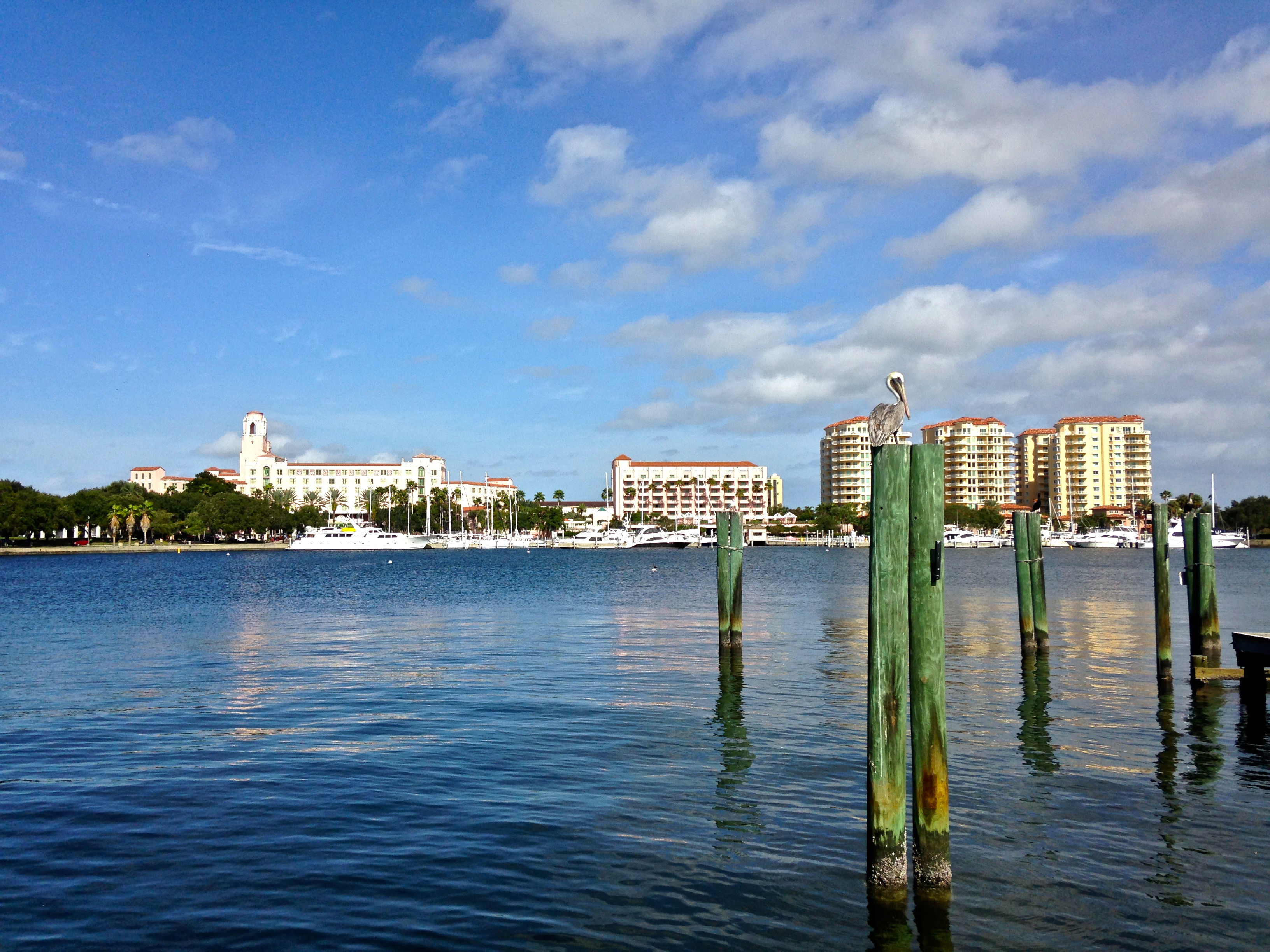
My grandmother first took me to St. Petersburg, which has an old-Hollywood glitz feel probably derived from the presence of The Vinoy, a National Historic Place and working hotel built in 1925. Filled with pastel colors, brilliant chandeliers and the memories of celebrities, the place overlooks the marina and the nearby ocean. St. Petersburg is also home to The Pier, a popular tourist attraction that during my visit, was the site of many locals hanging out on the boards with their eyes closed, listening to gulls and pelicans alongside the sailboats.

Photography Jenna Intersimone
The Vinoy is a working hotel built in 1925.
Photography Jenna Intersimone
The Pier is a famed St. Petersburg destination.  

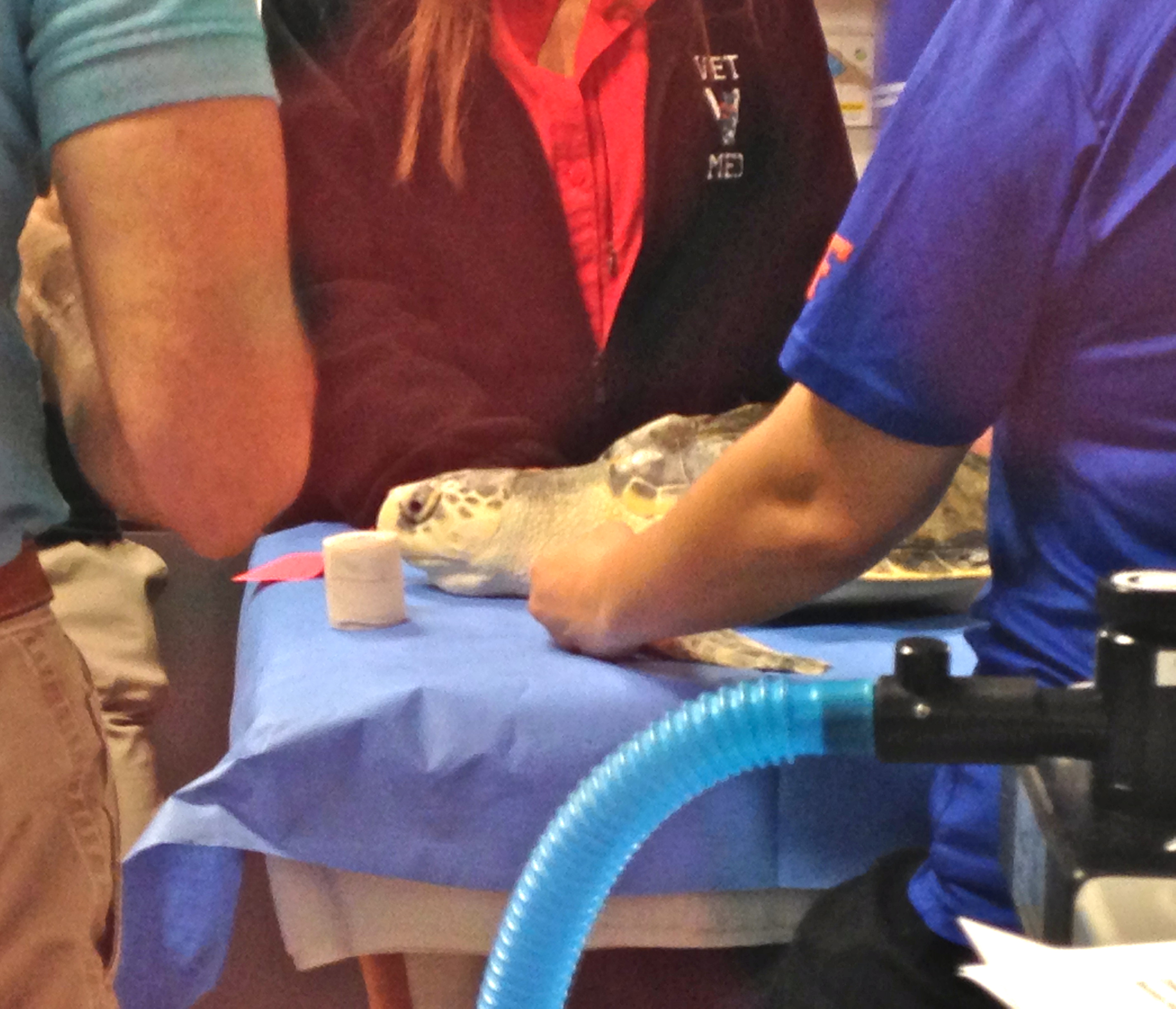
Clearwater, however, has less of the Old Florida air circulating but instead is glamorous in its own way – it is littered with skyscraping hotels, so many that it’s difficult to see the water from any part of the city. However, Clearwater’s Old Florida does exist in its tiny side neighborhoods which still house bright colors, elaborate seaside decor and sandy front yards near the Clearwater Marine Aquarium, which is home of Winter, the tailless dolphin from the movie Dolphin Tale. The Aquarium isn’t so much an aquarium as it is a rehabilitation center, where animals are frequently returned to the wild and the other inhabitants nurse lifetime injuries, among then Nicholas, a dolphin who was burned by the sun when he had been beached.

Photography Jenna Intersimone
The Clearwater Marine Aquarium is the home of Winter from Dolphin Tale.
Photography Jenna Intersimone
Nicholas is a lifetime resident of the Clearwater Marine Aquarium following his sunburn. 
Photography Jenna Intersimone
The Clearwater Marine Aquarium functions as a marine hospital.

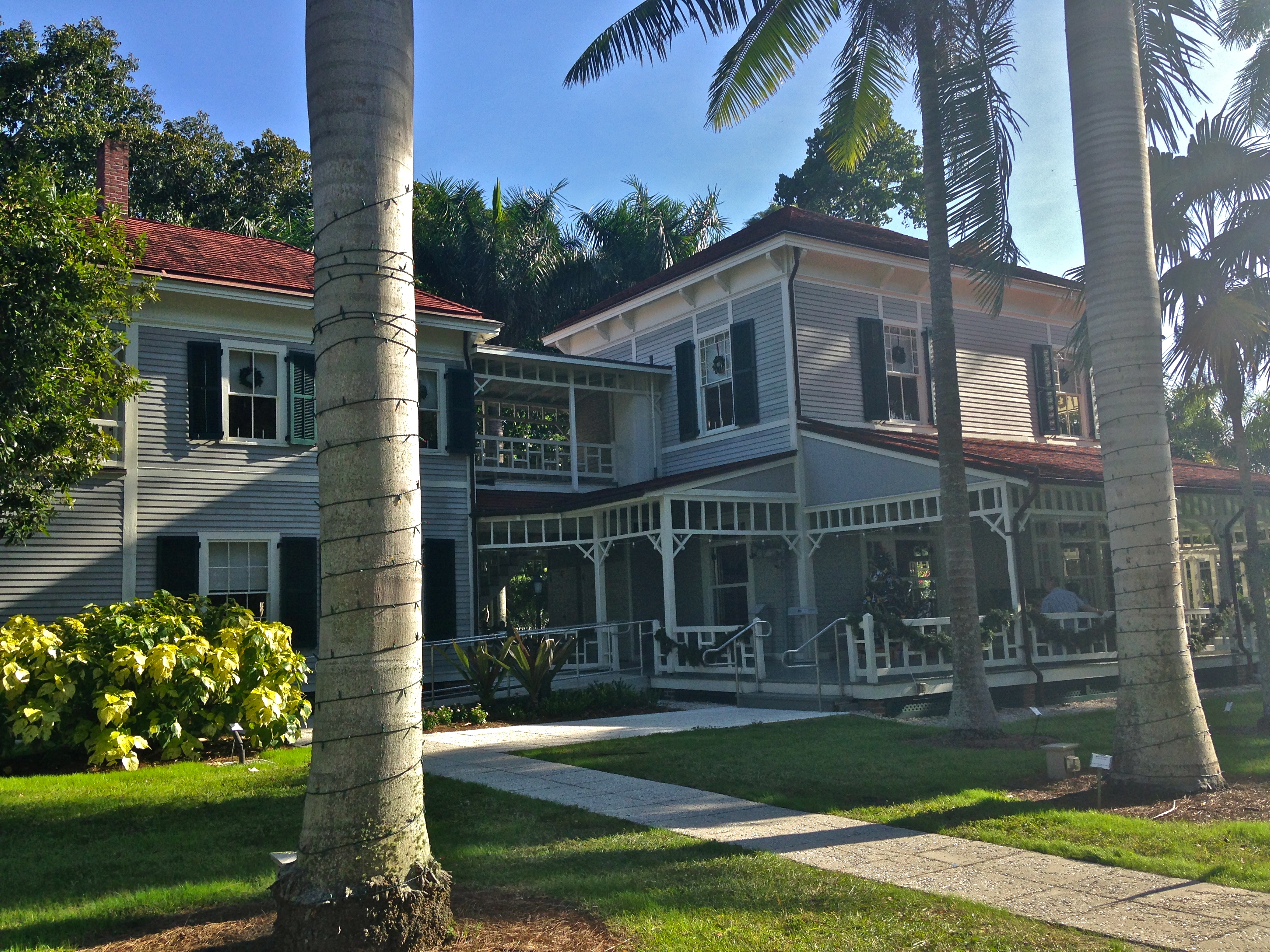
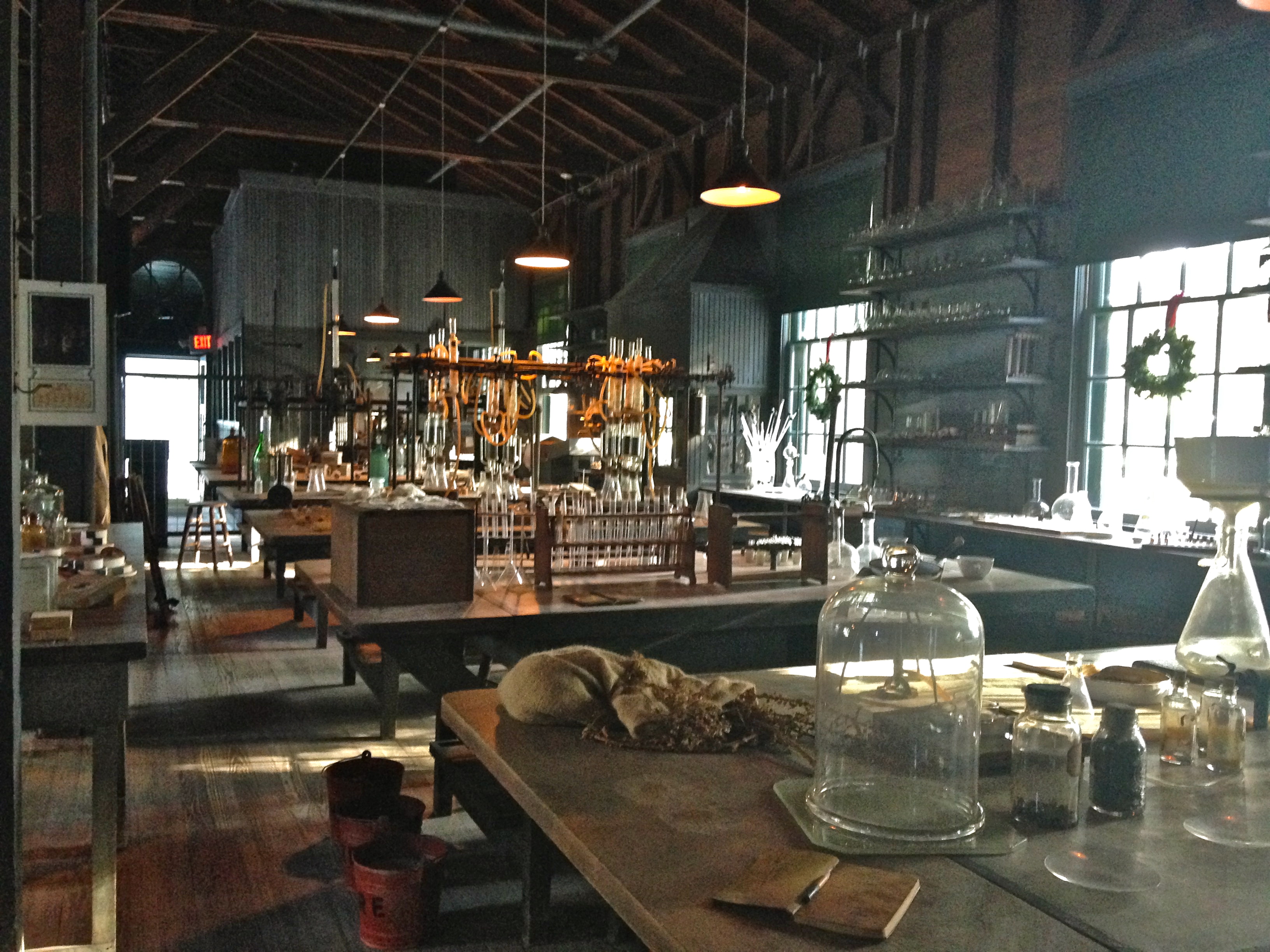
Fort Myers was our next stop, the site of the Edison & Ford winter estate, a beautiful yard and grounds where the families entertained many prestigious guests and Edison housed his laboratory. Not far from Fort Myers is Sanibel, an island off the coast of Florida which boasts the best beaches next to its sister island, Captiva.

Photography Jenna Intersimone
Fort Myers is the site of the Edison & Ford winter estate.
Photography Jenna Intersimone
Thomas Edison hosted his lab at his winter estate.

Although Florida cannot be the laid-back non-destination that it once enjoyed before travel became commonplace, remnants of Old Florida do exist within state lines, even inside of big cities like St. Petersburg, Clearwater, Fort Myers and Sanibel.

Lucy the Elephant

“Are we going to a store?”

“No.”

“A bar? Restaurant?”

“No.”

“Is it outside? Do I need my jacket?”

“No.”

Although I’m a seasoned shore traveler, I truly had no idea where Ed was taking us as a stopping point on our way to Atlantic City. I was offered no clues to our destination besides a lined piece of paper with a meaningless address that was only titled “Middle Stop.”

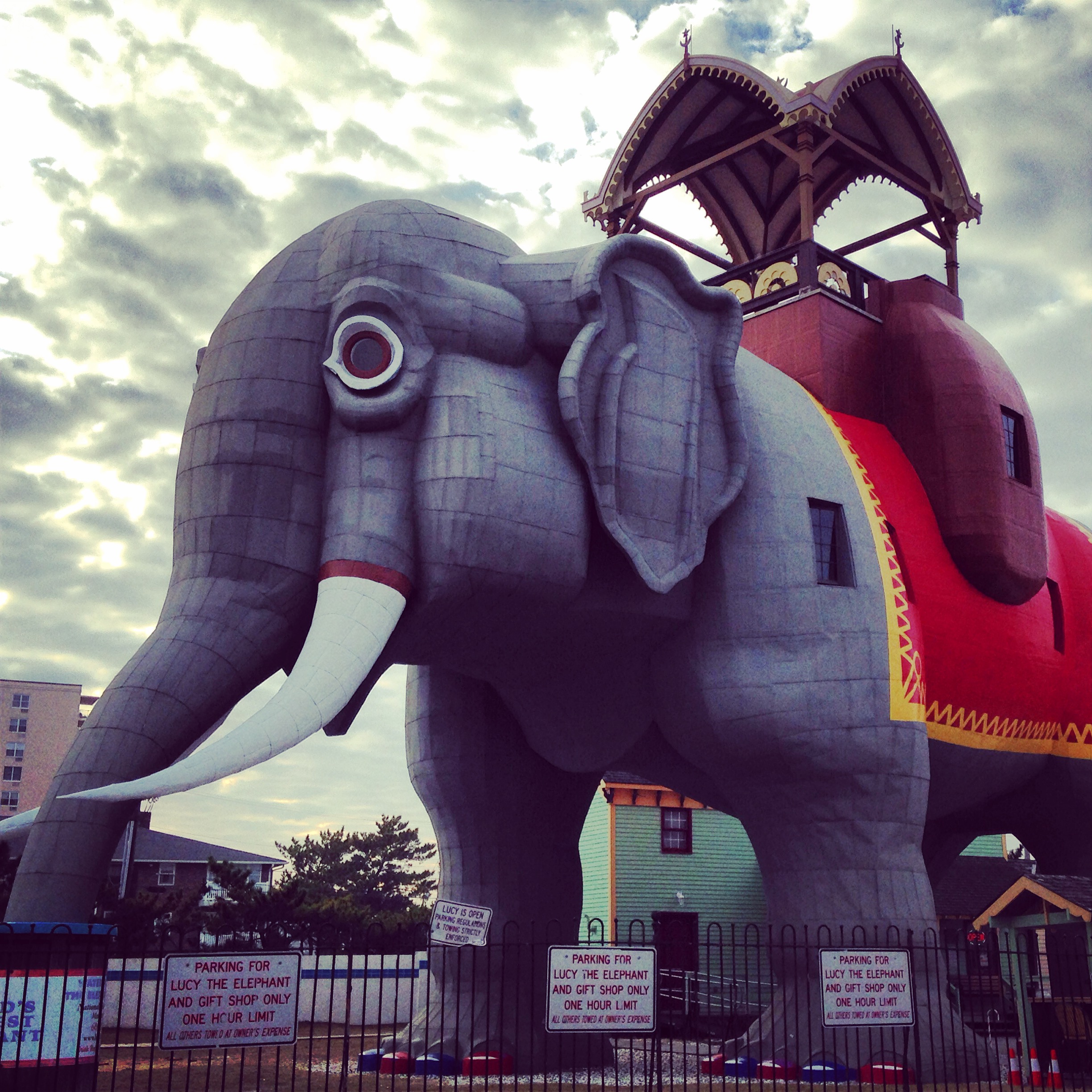
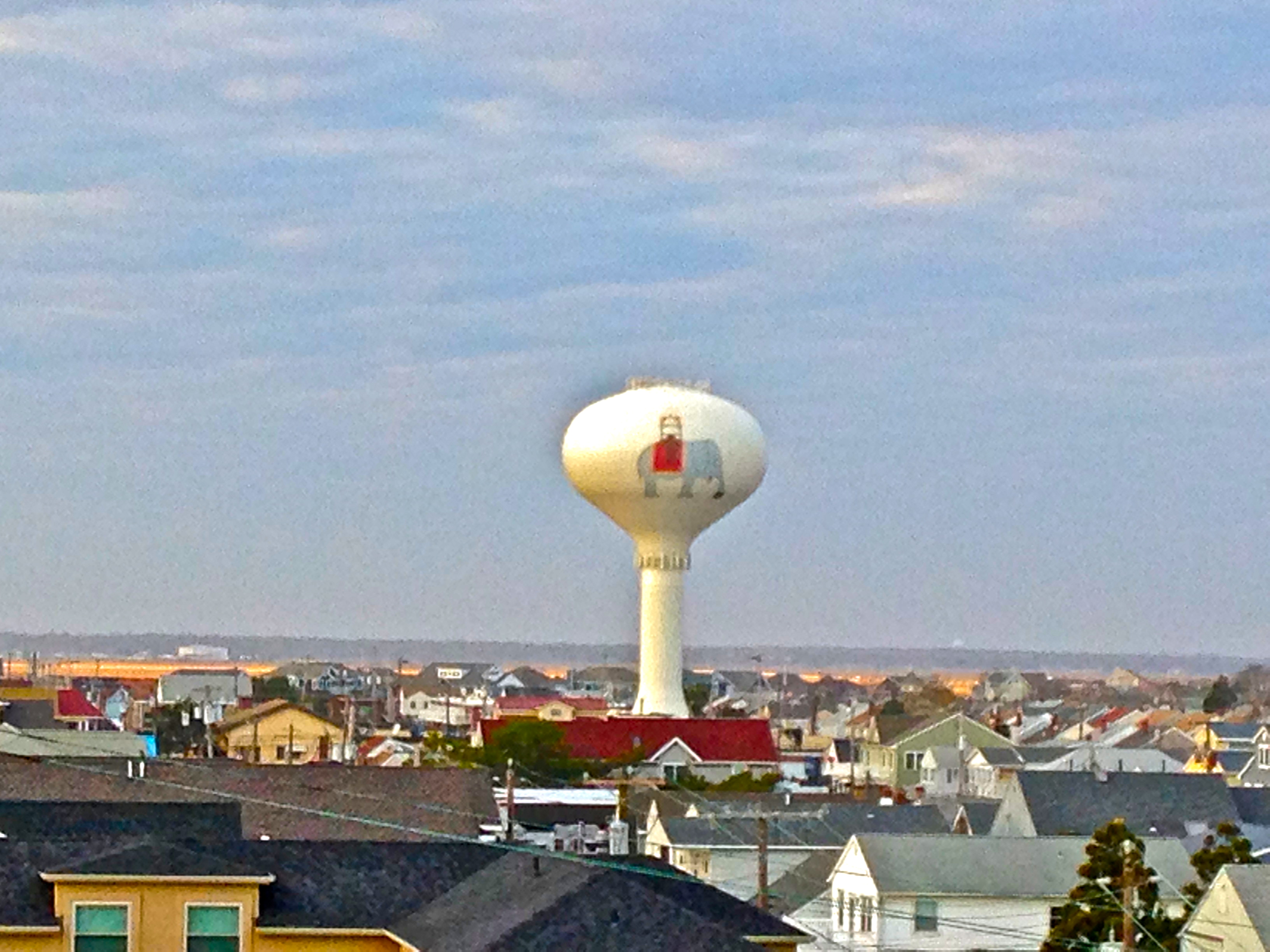
Upon pulling up to a giant elephant parked facing the Margate beach, however, the dots connected to various Weird NJ pieces I had stumbled across in magazines. We were visiting Lucy the Elephant, a six-story gimmick of a tourist attraction that has been overlooking the Atlantic since 1881.

Photography Jenna Intersimone

Lucy the Elephant was constructed with 90 tons of tin and wood by James Lafferty, who figured that a 65-foot tall elephant would be the perfect way to bring in tourists and sell some real estate. He got so excited about his idea that he also constructed two more elephants – the Elephantine Colossus of Coney Island and the Light of Asia of Cape May, neither of which survive today. Unfortunately, Lucy wasn’t enough to bring in buyers and Lafferty sold her after only six years.

She then went on to serve as a restaurant, business office, cottage and even a bar (shut down by prohibition). However, even throughout all of her various occupations, it wasn’t enough to keep the elephant in business – she fell into disrepair and due to a new buyer interested in the land under her feet, she was scheduled for demolition in 1969 to make way for a condo complex.

Photography Jenna Intersimone

Josephine Harron spotted the demolition signs outside of Lucy one day when she was at the beach and said to herself, “Someone should do something about that.”

She did.

Harron formed the Save Lucy Committee, which was given a mere 30 days to raise enough money to move Lucy or pay for her demolition. Volunteers fund-raised by going door-to-door, selling baked goods and enlisting local groups.

As you have probably guessed, the Save Lucy Committee miraculously raised the funds and she was moved 100 yards southwest and completely refurbished with the help of the only interested architect in the northeast area. The Committee’s efforts paid off in more ways than one – Lucy the Elephant was designated a National Historic Landmark in 1976.

After paying $8 and hiking up the winding staircase inside Lucy, we emerged in the same area which Lafferty originally showcased his real estate parcels. Now, the cozy den houses whimsical paintings such as Lucy in Blue or The Gin Drinkers, fantastical paintings all featuring the celebrated Lucy the Elephant. We checked out the ocean through Lucy’s eyes and then further hiked up the staircase to Lucy’s summit, an Asian howdah carriage which is a replica of the original.

Photography Jenna Intersimone

New Jersey is stuffed with oddball roadside attractions which seem to emerge in particular frequency at the Jersey Shore. At first glance, these curious sights seem not only peculiar, but pointless. And maybe they are – except for the fact that they house various degrees of history that can only be contained inside a cartoon, colorful elephant.

Photography Jenna Intersimone


LUCY THE ELEPHANT

Where: 9200 Atlantic Ave in Margate City, New Jersey

Contact: 609-823-6473 or lucytheelephant.org

Cost: $8 ages 13+, $4 ages 3-12, free ages 2 and under

Tours occur every half an hour during open hours, which vary by season

The Established Nomads of New Orleans

New Orleans is busted with so much twisted personality that it’s hard to believe that it all fits within the city’s 350 square miles. Although I got a taste of this last time I visited the jazzy little city, when you’re vacationing with your mother for a week and hopping on the most educational tours in town, you’re not going to get the full effect of the crazy that’s swirling around the rogue destination of the south.

When I finally hit Checkout on that Southwest ticket headed for for Louis Armstrong New Orleans International Airport, I was actually a little anxious because I had already been there. Doing something more than once bores me irreparably. I like to go to new restaurants, meet new people, wear new clothes, and, of course, visit new places. I wondered if I would find enough to entertain me during four more days running rampant around New Orleans.

IMG_7666
Dancing in the streets of Royal

Who was I kidding.

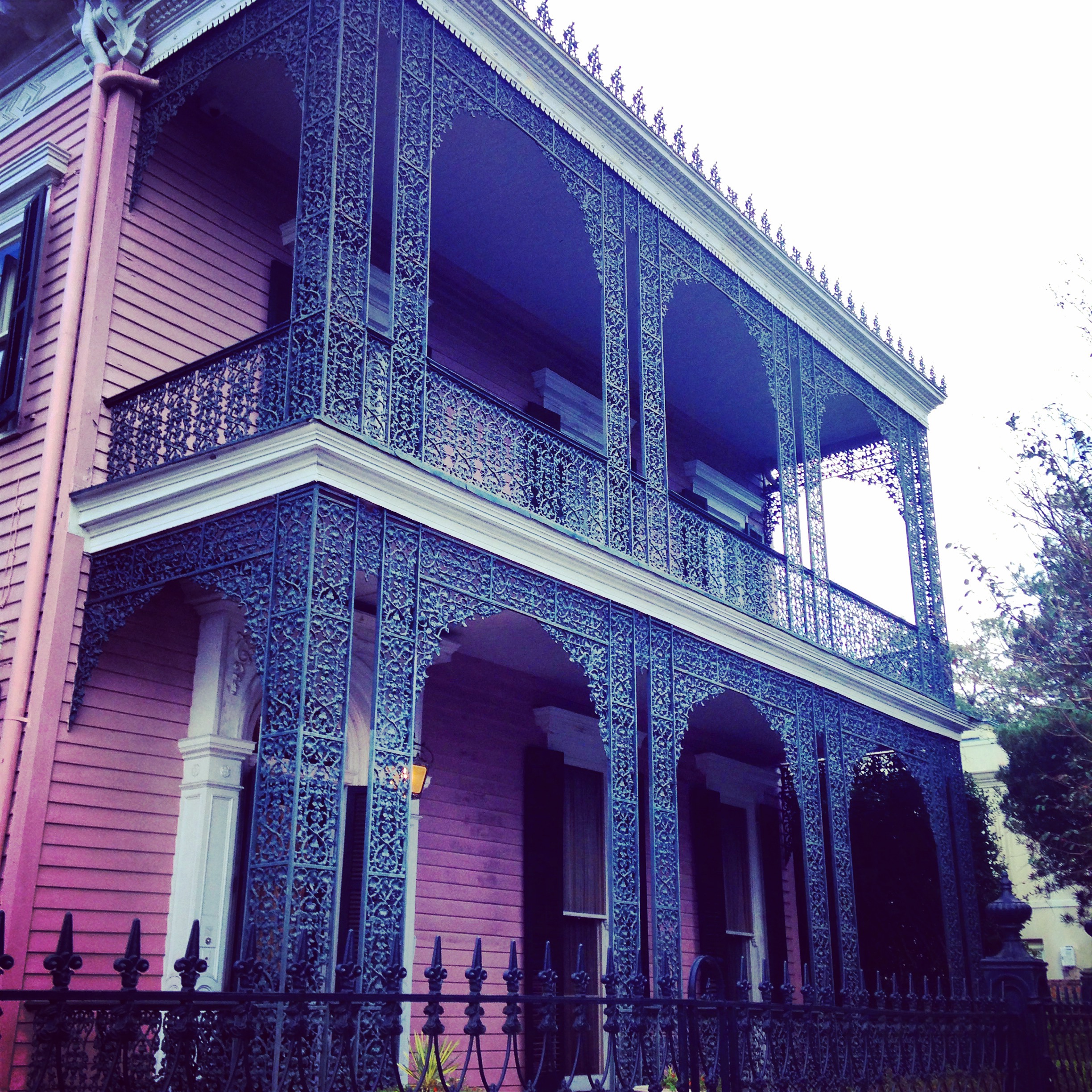
Part of the devilish charm that is New Orleans is that it is wildly obvious that even though it is a prime tourist destination, people live there. It’s clear when you spot the same character, day after day, walking their dachshund around the French Quarter, chatting up gypsies. It’s clear when you stop to tap your foot to the friendly neighborhood ragged folk band, settled nicely on their street corner and bumming cigarettes off passer-bys. It’s charming when you stop by the ostentatious Garden District and watch kids in little suits running up the steps to their two hundred-year-old house.

It’s these characters that make the city different every round.

IMG_7745
A handsome mansion in the heart of the Garden District

There are cities, arguably, that don’t have this peculiar little feature. Their populations are made up of seasonal tourists who want to strap on their sneakers and fanny packs, make sure they brought enough sunscreen and hop on the best all-day tours in town. There are cities where the locals stay snuggled indoors, stuffing their noses up at the thought of tourists bumbling about their town.

This is not New Orleans, because many of the city’s tourists have simply turned into locals.

There was Spock, or Taylin by birth, one of the many community nomads who sold jewelry but spoke in circles. With a bandanna wrapped around his head, he told stories that didn’t make sense together but were amusing one-by-one. In his typical flat voice, he told us how he broke into one particularly rude tourist’s Mercedes in western Florida, cut a rather large square of leather, and fashioned it into a rough wallet that was now for sale on his little table along Decatur Street.

Or Chilly, a name tailored onto his leather jacket, who told us about how he told his (former) wife that he had a new car awaiting her in the driveway and when she emerged, was greeted by a broom. She proceeded to chuck the broom directly at Chilly, making for an obscene absence of his left front tooth. He left the wife, left the tooth, and he and his tiny dog, Maximus, headed south to New Orleans, where they settled in by wandering the streets and talking to anyone who would listen.

And we can’t forget the rambunctious owner of Jimmy J’s, who’s name is not Jimmy. Amongst delivering coffee and making roses out of napkins for pretty patrons, he also performed magic tricks and told diners about his haunted house in the heart of the Garden District. Another man who talked in circles, he halfheartedly explained how he, a California man, ended up in NYC, then various other cities, and finally settled in N’awlins.

IMG_7658
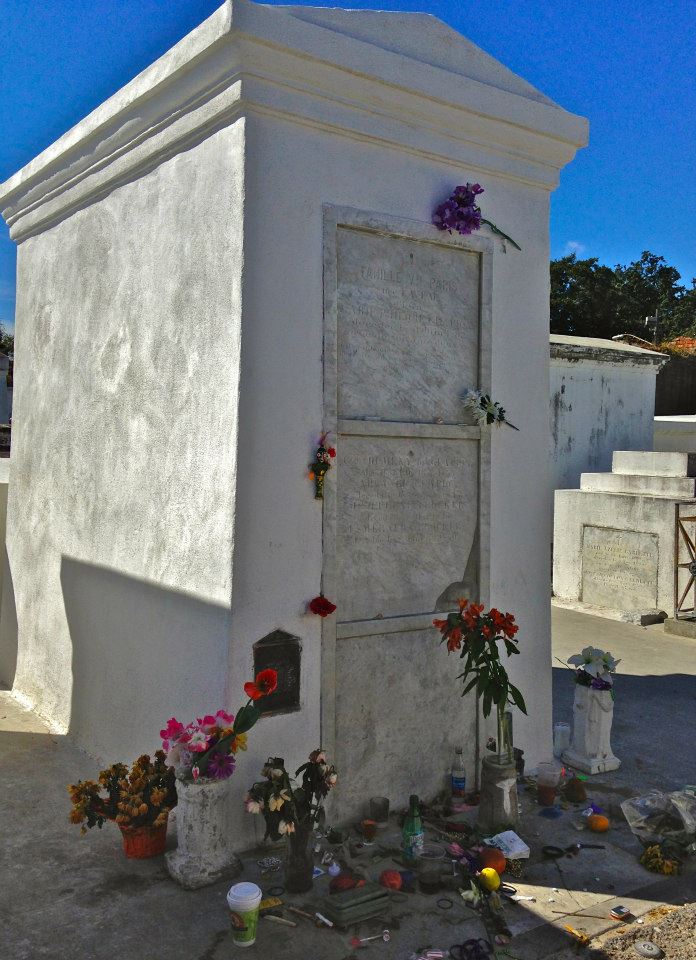
The desecrated tomb of a voodoo priestess in the St Louis Cemetary

I am not alone in my encounters with personalities in the Big Easy. Before setting off, I was encouraged to seek out a dreadlocked jazz player on Frenchman’s Street by my dentist, a theatrical phantom guide at the Voodoo Lounge by a lonely neighbor and a grayed lost fisherman in Pirate’s Alley. It’s a mystery how these eccentrics found their way to the city, but it’s no surprise as to why.

Characters flock to New Orleans because they know they have found a place to belong. Los Angeles is too blonde, New York City too expensive, D.C. too active and Phoenix too quiet. But New Orleans – New Orleans is the perfect hodgepodge of crazy, embedded within the cheesy disgust of Bourbon Street, the subtle elegance of the Garden District, the haunted history of the French Quarter and the cultural mass of Jackson Square to make even the dirtiest nomads feel at home.

IMG_7754
The magical air of Jackson Square

The Backwards Haunted History of New Orleans

Although New Orleans is probably one of the most jovial stretches of 350 square miles around, there is a peculiar air of miscreant, a slight itch of a strange mix of beings that expands beyond the jumbling of psychics, artists, tour guides and alcoholics. It’s the undeniable stir of the living joined with the dead.

5
Jenna Intersimone Photography

My favorite part about the haunted background of New Orleans, a city that dates back to 1753 and has, and is, riddled with convicts, prostitutes, voodoo and disaster, is that much of it relies on myth. You’ll hear various stories from various locals about that ghost, this voodoo queen, or that cursed home but nobody has so much as the written word to back it up – only word of mouth. To those who have seen the haunts in action, this is more than enough.

It’s evident when walking through the Garden District, riddled with historical homes and anxious ghosts. It’s clear when strolling through the French Quarter, the site of two fires which literally destroyed the entire city. It’s even obvious when speaking to battered locals, who have the sense of what’s it’s like to have survived more than they bargained for.

Jenna Intersimone Photography

According to one tour guide, New Orleans holds this air because it has seen more than its fair share of disaster in a very short amount of time. Hurricane Katrina, The Great Fire of 1788, The Great Fire of 1794 and the Battle of New Orleans, just to name a few. Regardless of the reasoning behind it, it is clear – New Orleans is one haunted city.

Haunts are definitely not limited to Orleans locals, either. Even celebrities are not immune.

2
Jenna Intersimone Photography

Nicholas Cage bought the LaLaurie Mansion, located on the corner of Royal Street and Governor Nicholls Street, in 2007 for $3.45 million. It was sold at auction a mere two years later. Why? According to popular myth, the place is cursed.

Marie Delphine LaLaurie, a Louisiana-born socialite, was a pretty popular person in New Orleans throughout all three of her marriages – that is, until April 10, 1834. Married to Leonard Louis Nicolas LaLaurie, a doctor, the couple threw frequent parties until on one ordinary day, a fire broke out. The party continued, flooding into the streets, and firemen rushed into the LaLaurie mansion to put out the blaze.

First, they came across an elderly African American slave who was chained to the stove. In hysterics, the woman admitted that she started the fire in a suicide attempt because she was told she was going to an upstairs room, in which no slave ever returned. She said the firemen could do anything they wanted to her – kill her, throw her in jail – but she was not going back to Delphine LaLaurie. Baffled, the firemen stormed the rest of the house to find the mysterious room, and what they found brought many to rushing out the door in a vomited panic.

Behind a deadbolted door, they found slaves tortured and bound in otherworldly ways. One slave had an inch of skin scraped in a circular motion around her entire body – the long strip of skin found in a jar in the room as well. Another had all of her long bones broken, only to be reset facing opposite directions so that she could fit inside a tiny box. It is said that as many as 100 slaves died in LaLaurie’s warped ‘care.’

Apparently, this didn’t bother Cage – until five years had passed, the same amount of time that the LaLaurie’s lived in their mansion. After that, his marriage fell apart, his assistant stole all his money, he went bankrupt, and his movie gigs abruptly stopped. He claims it was the house.

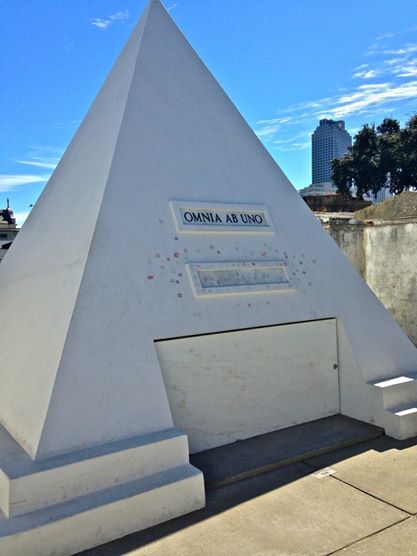
Cage went to a medium, who told him that to stop the curse from following him into the afterlife, he needed to build a pyramid-shaped tomb in the center of the St. Louis Cemetery at certain dimensions with the words ‘Omnia Ab Uno’ (Everything From One) in scripted on it and be buried there upon his death. Cage wasted no time.

4
Jenna Intersimone Photography

New Orleans also apparently houses vampires. John and Wayne Carter, two average brothers who worked at the docks, lived at the 800 block of Royal Street. On one 1932 night, an 11-year-old girl with cut wrists fled their apartment to the authorities, where she informed them that she had been ‘fed on’ after being abducted by the men. Upon entering the apartment, authorities found four others bound and cut, one already dead. When the Carters returned, it took eight men just to restrain the two, which were of average height and build and had been working manual labor all day long. Upon being put to death, the Carters were buried and in New Orleans tradition, the coffins were taken back after one year. However, both coffins were already empty.

I wish I could say that the victims went on to lead happy lives, but they certainly did not. Directly proportionate to how many times they claimed to have been fed on, the situations of the victims got worse and worse. The adult male went on to murder 442 people, dissolving his own victims’ bodies in sulfuric acid. The adult female voluntarily committed herself to a psychiatric hospital for life. Remember – this is a psychiatric hospital. In the 1930s. Committed voluntarily. Not pretty.

Then, there is the infamous voodoo queen Marie Laveau, who’s name rings loudly throughout New Orleans on everything from hot sauce bottles to voodoo museums. Many attest to seeing her in the flesh, leading rituals with naked followers dancing and chanting, as well as seeing her walking the streets of the French Quarter.

One place that Orleans goers can get a taste of Laveau is at her tomb at the St. Louis Cemetery, where she is laid to rest among thousands of offerings of makeup, candy, mirrors and money placed there every single day. She isn’t without desecration – just a few weeks ago, someone covered the entire tomb with pink acrylic paint which took the Catholic Church quite some time to scrub off.

1
Jenna Intersimone Photography

New Orleans may be pretty, but within the pleasant, pink mansions and colorful flowerbeds lies things much more sinister – the mark of uneasy souls.

Jenna Intersimone Photography

Why Seneca Lake is the Perfect Fall Getaway

I worship the fall.

I actually feel like October is my real birthday month, when I can pumpkin pick, apple pick, watch horror movies, drink fall beers and get fake-scared on haunted hay rides all month long (My actual birthday is in February). I like October so much that I usually refuse to travel during those 31 days, being that for the only four weeks out of the year, I actually prefer to stay in my kingdom of fall foliage in the forests of northwestern New Jersey. This rule has led me to book three trips cross-country from November to December. Whoops.

Anyway, following a mishap at the travel agent where my family left holding no confirmations being that we couldn’t agree on a single getaway, a travel savior came into focus.

Rich, my dad’s lawyer friend, who he does plumbing for.

Rich has a daughter, Amy, who runs some rustic cabins up in Seneca Lake, New York, which is the deepest of the Finger Lakes. I’ve never been to the Finger Lakes, barely ever been to upstate New York (too pretentious) but I figure it’s gotta be pretty nice in the fall, I mean this is a lake, so I agree to leave my short-lived hometown paradise for a precious weekend.

Turns out, Seneca Lake a fall empire.

Although this was unknown during our four-hour drive north starting at 9:00 pm, it being so dark out that we couldn’t find our cabin which we were 20 feet away from, it was immediately obvious when we woke up and stepped out the door. All around, we were surrounded by fall foliage, autumn-themed wines and beers, cool outdoor activities and farmer’s markets. If you’re looking for a weekend getaway (because you don’t live in the middle of nowhere, obviously) here’s the reasons why you should head to Seneca Lake, New York.

1. The Seneca Lake Wine Trail because honestly, who doesn’t love being toted to 32 wineries, all within a three-minute drive of the next? The Wine Trail, which can trace its winemaking history back to 1866, is composed of wineries lining the east and west sides of Seneca Lake, full of beautiful fall foliage in a serene environment. Most wine tastings, in which you can taste five to seven local wines while overlooking Seneca Lake, cost $3 to $7 (generally) making for a pretty cheap yet blurry afternoon out. With the variety of personality that each vineyard exhibits, you can’t really get bored (or sober).

wine

2. The Windmill Farm & Craft Market is the first craft market in upstate New York, with the numbers to prove it – they receive an average of 9,000 visitors a week. With about 200 shops, they sell all kinds of cool stuff like leather goods, homemade pastries, jewelry, knitwear, toys and games and a million other things, mostly being sold by the Amish. Even though the market itself lies about 30 minutes away from from the other main attractions of Seneca Lake, it is worth the scenic and relaxing drive up the New York countryside.

3. Watkins Glen State Park may cost $8 to get in, but it is also, and rightly so, the most famous of the New York state parks due to the 19 waterfalls cascading down 200-foot cliffs within two miles. Hikers can travel the trail, equipped with their walking shoes, to capture this truly spellbinding winding walk. You can’t miss the spray of Cavern Cascade or the various pools, especially in this season made for the outdoors.

falls

4. Finger Lakes National Forestbecause what’s the outdoors without a hearty hike? Check out this park, which features 30 miles of interconnecting trails that will take you to pastures, forests, ravines and gorges. This is especially a great spot if you’re equipped with a horse, mountain bike or binoculars (for some quality wildlife watching).

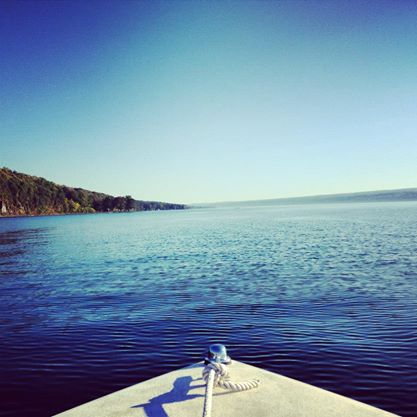
5. Boating on Seneca Lake is an obvious must-do when you’re staying on, umm, Seneca Lake. If you’re not lucky enough to have a nearby friend with a boat like we did (sorry), then don’t miss the opportunity to travel on an uncrowded body of water by booking a trip on one of the excursions. Try out Schooner Excursions, which go for $29 to $49 depending on the time of day of the cruise.

lake