My Life Aboard The Traveling Circus

As anyone who has ever read one thing written by me ever, you probably know that the most settled I have ever been is the few years where I lived in the boondocks at the edge of the woods with my mother, a yappy beagle, and an orange cat.  Not very exciting… or so it seems. 

Now that I’m back, (poorly) adjusting to post grad life, it seems all the more depressing. I have no one to hang out with, the only thing to do on a Friday night is go bowling (except there’s no one to go with…), and the only bar within a reasonable distance is Applebee’s, which doesn’t really work for me because I’m not ready to pick up soccer moms quite yet.

However, back in the day, this town was the place to be! Well, not really, but we made the best of it. Because there was nothing easy to do (…the closest mall is still 30 minutes away…) we had to make our own fun. Every single day. Mostly because we didn’t have a choice, but even still, it made us able to have fun in a cardboard box. I used to be good friends with a girl who moved to London, and her friends there in the city wouldn’t even believe her when she told them the trouble we got into on the weekends, no mind-altering substances necessary. We didn’t have a bar or a movie theater or a mall to keep us company, so we certainly never gave up being creative trying.

We would take our friends’ cars and hide them around town and make scavenger hunts for them to find them again. We would play golf in the middle of the night, setting up our own courses in abandoned playgrounds. We made our own boardgames, tie-dyed sheets in the backyard and then made them into tents and camped out under them, ran through high school hallways by nightfall, and otherwise caused innocent mischief like only kids can do.

1

To do these things, I didn’t have to get on a plane or pay an astronomical museum “donation” fee. I didn’t have to try to find a dirty hostel to stay at or figure out why I had to pay for tap water at an overpriced tourist restaurant and I didn’t have to listen to a tour guide with a heavy accent tell me the history of anything. Instead, all I had to do was walk outside and call one of my dopey friends to come over.

In many ways, I think that it was these boondocks adventures that prepared me for a nomad life, one spent living out of a suitcase and scavenging for free meals and trying to solve little crises that only happen when you’re 18, dumb, and broke. Irony is, as much as we all complained about living in the edge of nowhere back in the day (and then, trying to make the best of it by having more fun than anyone who lived in civilization), it was those quirky adventures that made us yearn for it for every year onward, always keeping us upon the life aboard the traveling circus.

Staying Awake in the City That Never Sleeps

New York City has never, and will never, be a sight to me. It will never be a tourist destination; it will never have the romanticism of Florence or the grandeur of Paris or the history of Budapest. However, I’m also realistic to know that this isn’t New York City’s fault. This hub of business and fashion – an epicenter of power that many people hope to one day visit – is probably about 45 minutes or so away from me, which, when you already live in a town with only a general store to call its own, isn’t much of a drive.

Each time I visit this graying city, I feel prompted to feel guilty that I have never climbed the Statue of Liberty and never rode a double-decker tour bus, although I can boast that I have scoured the Louvre and stood upon the Cliffs of Moher. I feel bad that I’ve never even skimmed a New York City guidebook or bothered trying to find a worthy pizzeria. Instead, I make sure I bring $20 for the monstrous tolls and hope that I don’t get home too late to shower off the city scum.

So here is my challenge to myself, and maybe you, too : below is a collection of New York City sights and attractions that will make the horrific parking worth it and maybe, if the city is in your backyard, too, make you rethink your need to hop on a plane for every new destination.

Image

1. Little Italy is no Florence, but it’s still pretty reminiscent of classics like The Godfather with its zeppoles, pasta joints, and pastry cafes lining the streets.

2. Washington Square Park arch is a good ol’ American replica of Paris’s Arc di Triomphe where you can stop and listen to some street musicians, watch the hippies and beatniks, and enjoy a cup of joe.

3. United Nations Secretariat Building is a 39-story complex which isn’t open to the public, however visitors can tour the midcentury dignitaries room when it is not in use, check out the current exhibits, and send out personalized postage using its own post office.

4. New York Public Library is guarded by Patience and Fortitude, the two marble lions that dote the entrance, before you can hustle on in and check out the muraled 300 foot Rose Main Reading Room.

5. St. Patrick’s Cathedral boasts more than 200 saints, stained glass, the alter of Saint Louis, and an oversized copy of Michelangelo’s Pieta crafted by the same man who created Patience and Fortitude, above.

6. Radio City Music Hall houses opulent chandeliers, lush carpets, and its own Art Deco concert hall meant to resemble a setting sun, and is also the place where the Radio City Rockettes find themselves each Christmas season.

7. Museum of Modern Art contains constantly-updated new exhibits and a sculpture garden with works by Picasso and Rodin.

8. Green-Wood Cemetery is the final resting place of famous New Yorkers such as William “Boss” Tweed, Leonard Bernstein, Jean-Michel Basquiat, Lola Montez and Louis Comfort Tiffany. Be sure to check out its massive Gothic arch at the main entrance as well as climb to the top of Battle Hill, one of the highest points in Kings County and a pivotal spot during the Battle of Brooklyn in 1776.

9. Flatiron Building is a notoriously un-tourist friendly attraction because the space above the ground floor is inaccessible to the public (where publishing house Macmillan calls home), however its making in 1902 still represents the coming modernity and innovation to the city, although back in the day it was said that the building would never stand the high winds.

10. Brooklyn Bridge was constructed in 1883 and, at the time, was a feat in itself – it was the longest suspension bridge in the world  and now, is a nice stroll for pedestrians and cyclists to enjoy the views of lower Manhattan for a little more than a mile.

11. Empire State Building, a staple of the Empire State, was the city’s highest building upon its completion in 1931.

12. The Statue of Liberty offers breathtaking views of the New York Harbor and Ellis Island, the entrance of immigration for millions of hopeful soon-to-be Americans.

13. Central Park is a 843 acre plot that has become a cultural hub as well as the destination for sunbathers, ice skaters, and bird watchers.

14. Grand Central Terminal sports a constellation adorned ceiling and a four-faced opal clock over the main information booth as well as a Tiffany glass timepiece and a likeness of Mercury, the god of travel.

15. American Museum of Natural History hosts dinosaurs, fossils, and human origins and culture halls.

16. Staten Island Ferry runs 24/7 and is totally free, providing the scenic tour from Staten Island to lower Manhattan.

17. Times Square was once a hub for vice, teeming with sex shops and drug dealers. Over time that notorious reputation has eroded, and now the area can feel like a tourist-clogged shopping mall.

18. Bronx Zoo houses 5000 animals over 265 acres.

19. Rockefeller Center is a tourist hub that contains the bronze Atlas statue, the skating rink, the Today show plaza, Top of the Rock, and the rinkside Prometheus statue.

20. Yankee Stadium opened in 2009 to much fanfare and stands opposite the now-flattened original.

Information courtesy of Time Out New York 

How To Choose a Guidebook

As we all are well aware, I’m totally down for saving dollars whenever I can… and I fully trust technology to help me do so. I use GasBuddy to find the cheapest gas stations near me, TripAdvisor and AroundMe to find the best  restaurants in my area, and I love FourSquare for snagging discounts at places I check into. However, technology isn’t always the answer, and this is the case for one classic traveling staple… The Guidebook. Nothing beats buying a ripped up guidebook off the Internet for $2, carrying it around and holding up a map over your face, and when it’s all said and done, stuffing it in the hostel drawer for the next lucky traveler. Adversely, no one wants to put their trust in a guidebook that turns out to not be reader-friendly, outdated, and only directs you to boring places. So, to help you out on your journey through the library, Amazon.com, or the nearest book kiosk at the airport, here are some of my top guidebook picks.

I’m a huge sucker for that cheesy dad-type Rick StevesEven though he sometimes has lame jokes and the hand drawn maps can confusingly be not-t0-scale, one of my favorite perks of these guidebooks is that attractions are nicely organized in a meaningful manner of those you can’t miss and those that can be forgotten when you’ve only got a few days in a new city. These guidebooks also feature easy-to-follow walking directions and descriptions of attractions that stick to the cool parts and don’t expect you to read paragraph after paragraph about one painting. At the same time, these books choose enough detail in that when attending a fairly well-known museum, I can often use the book itself as my own “tour guide.” The book itself reads a lot like a well-traveled friend showing you around a new place.

1

When I can’t get a hold of a Rick Steves, I go for Frommer’s, an American classic for travelers. These books read a little more classroom, but they are still jam-packed full of essential information like the easiest public-transportation ways to access your favorite destinations, tips about countries you wouldn’t know otherwise, and top events and festivals in the area. However, I sometimes feel like there is too much information and it needs to be scaled down a bit or organized better so that one can quickly sift through to find the desired text.

2

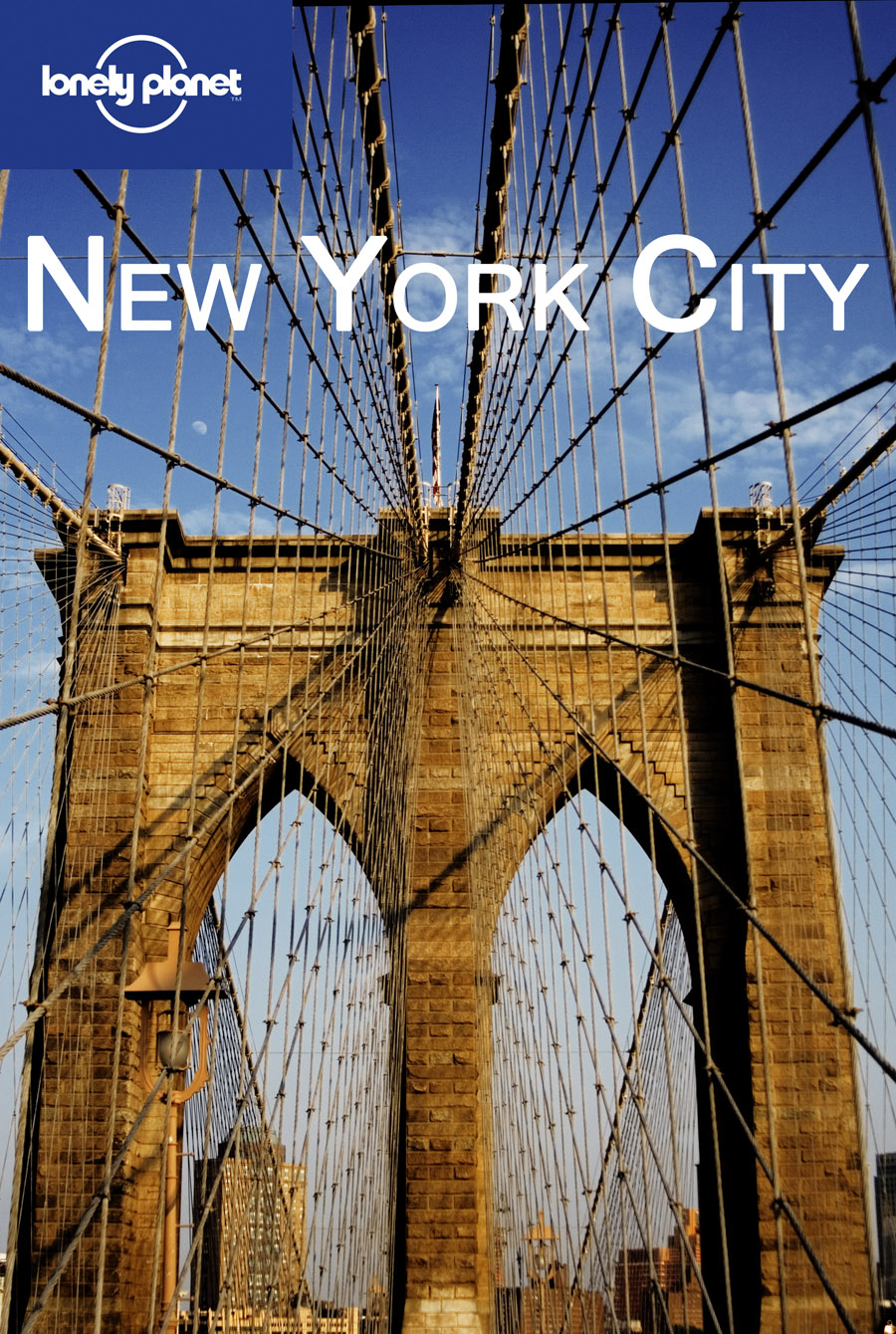
I like Lonely Planet guides – I appreciate their user-friendly and modernistic designs and clever and colorful photos, however, they too, try to pack too much information into too-few pages, missing a lot of stopping points and glazing over some that they do mention. When buying a guidebook, I want to be carrying something that I feel like I would die if I left it at some trattoria, not something I’m constantly wasting time sifting through the pages and wondering if I missed out on a cool sight.

3

When purchasing a guidebook before a trip (which I definitely recommend because you’ll have your pick of any brand and you can buy it used and save money, plus you can read it on the plane and get a headstart) make sure you check out the “Look Inside” feature usually available on Amazon.com because all guidebooks are not the same. Obviously, you want it to cover all or most of the destinations you are going to and you want it to have the focus you prefer, either one focused on history, important museums, and educational opportunities or the most well-known attractions, coolest sights, and best restaurants. If you’re buying a used guidebook, know that you will most likely have to purchase a map as well.

On My Way Home

Living on the Jersey Shore, surrounded by 24 hour diners, dark-haired greaseballs, and leopard print yoga pants, I couldn’t really be much further from Italy, where well-dressed people enjoy shots of expresso and kiss on street corners. I think nostalgically about my time in Italy daily, often wondering how I ended up back here surrounded by the congested parkway and the smog of the nearby city. Often, it feels like that was another world, another lifetime, and it becomes more and more difficult to remind myself that was me there and not a body double. However, during every afternoon run on the boardwalk, gazing out over the pink sky and quietly whispering winds, I sometimes forget that I’m here at all and instead, I’m taken back to being that carefree, kind-of-dirty kid one year ago.

The Jersey Shore beach doesn’t really look like any of the beaches I ever saw in Italy did. It doesn’t look like the spotted mountainside beach towns of Cinque Terre, nor does it possess the sunny winding roads of Sorrento or the wilderness-ridden cliffs of Capri. The air isn’t as light and clean here and the people aren’t as happy and slow-moving. Hell, even the water here doesn’t have the turquoise dreamy tides of the Mediterranean. However, seaside smells and salty air are the same no matter what town you’re in, and the little towns on the Shore are no different. Sometimes when running on the boardwalk, I almost want to close my eyes and, just for a second, remember my first weekend trip to Cinque Terre.

The more places that you go, the more that you realize how remarkably similar many of them are. Don’t get me wrong here – the world is a quirky place, reminiscent of a family of black sheep where each cousin is a little different from the next. There is no place in the world with the tres chic of Paris, the art splendor of Florence, or the loom of Budapest. However, they all have sister qualities within them nevertheless. New Orleans is the dirty, rogue sister of Savannah, San Francisco, the big-city hipster brother of Seattle. And when you happen to run into one of these unexpected family members, even in a place as unsexy as the Jersey Shore, it’s always a welcome reminder of the home that once was.

IMG_0787

Become The Lazy Tourist

Back in the day, you would never catch me dead staring blankly at a television screen, sitting at my kitchen table eating a meal, or quietly listening to music. Being away on a trip to a faraway land made this even more out of the question – time is of the essence; so why sleep, relax, or eat when you could be exploring?

Even during my too-short semester in Florence, Italy, when I went away for the weekends, I packed every moment full of museums, activities, attractions, and bars. I rationalized this insanity by arguing to myself that during the week I was spending my time enjoying every bite of gelato and every walk down Via Roma. Although I’m glad, in some ways, that I used my time wisely every weekend when visiting other countries and cities throughout Europe, by the end of the semester, my weekly plane trips to these faraway lands left me feeling pretty burnt out.

During one of the last few weeks I spent as a semester-abroad student, my best friend from back in the States came to visit me and we went to Budapest, Hungary with her mother and aunt. For the first time all semester, I didn’t bust my ass trying to find the best prices for every tour and every meal. I didn’t have my guidebook held up over my face, trying to read the map and making sure we had hit every museum on the block. And I didn’t worry.

Instead, I spent a weekend wandering open-air markets, eating at probably-overpriced restaurants, and laying in an awesome bed in – gasp – a chain hotel. I took long showers and read books when I felt like it and I ate a ton of these weird Hungarian pastries. I was a tourist. A lazy tourist, one of the biggest travel blasphemies known to travelers everywhere.

Don’t get me wrong, I’m sure real Budapest is great, just like all the other international cities were great (for the most part). I’m sure Castle Hill and the Great Synogogue are mind-blowing and very much worth venturing outside instead of just driving by in some lame red tour bus. But I will most likely never know what the inside of the House of Terror looks like or what real Hungarian food tastes like, because I was too busy shoveling strawberry yogurt in my mouth for $15 a pop at the Four Seasons. And that is perfectly okay.

I ate breakfast at the hotel dessert bar and I took idiotic pictures posing next to stern guards and funny statues. I had enough food to go into a coma and I went to bed early. I wandered around a beautiful, historic city with my best friend and I didn’t appreciate one bit of it. Just because you’re a traveler doesn’t mean you can’t be a tourist once in a while.

6

The Priciest Places in the World

When you’re a kid, you just know you’re gonna be loaded. You’re not really sure how or why, and you certainly haven’t considered that your only real gift is being able to watch Spongebob marathons for ten hours straight, but it doesn’t matter because you’re clearly destined for filthy money.

Well, you’re not. Sorry. But don’t be sad! Just pretend that you live in one of these badass mansions instead.

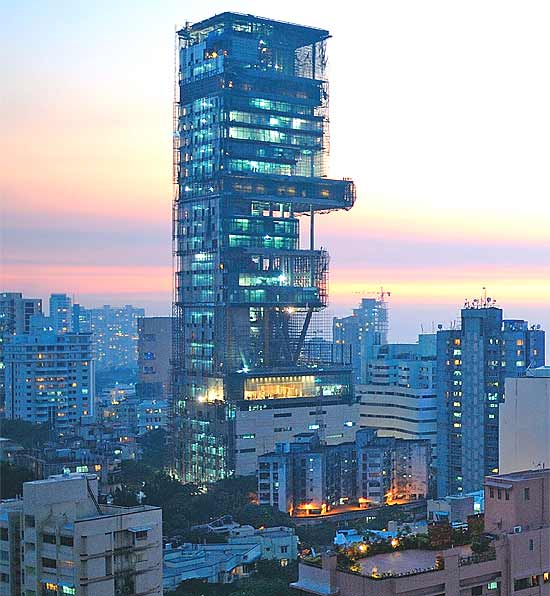
1. Antilla of Mumbai, India 

This oddly shaped 1 billion dollar tower boasts 27 floors owned by Mukesh Ambani, the fifth richest man in the world and Chairman, Managing Director and largest shareholder of Reliance Industries Limited, a Fortune Global 500 company and India’s second most valuable company by market value. At 570 feet high, the building has a gym and lounge on each floor, an indoor and outdoor bar, and rooms for the 600 people on staff.

Image

2. Villa Leopolda of the French Riviera 

Built in 1902 by King Leopold II of Belgium, the extravagant home now houses the Safra family, bought by banker Edmond Safra. With 11 bedrooms and 14 bathrooms, a bowling alley, multiple kitchens, and movie theater, it’s $506 million price tag is anything but shocking.

Image

3. The Penthouse of London, England 

Located in the residential district of London, Number One Hyde Park is the most expensive apartment in the world valued at $200 million. Sporting wine tasting rooms and a spa, it is also extremely secure with bulletproof windows and a secret tunnel to the Mandarin Oriental Hotel.

Image

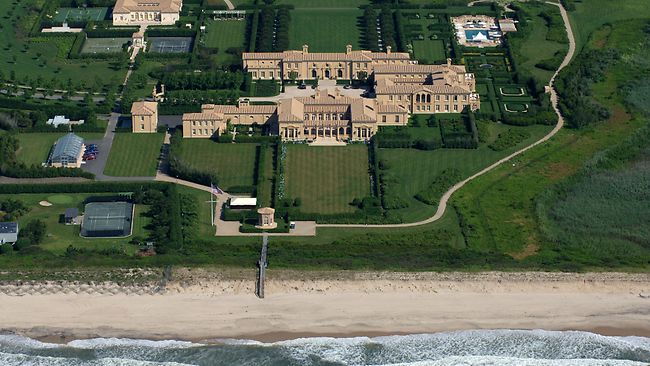
4. Fairfield Pond in the Hamptons, New York 

Considered the largest residential complex in all of America, the $170 million property is owned by junk bond billionaire Ira Rennert. Over 63 acres, it boasts 29 bedrooms, 39 bathrooms, sports courts, a bowling alley, and a $150,000 hot tub over 100,000 square feet.

Image

5. Heart Castle in San Simeon, California 

This $165 million mansion was constructed for newspaper tycoon William Randolph Hearst including 29 bedrooms, 3 pools, a club, and a movie theater. Following Hearst’s death in 1951, in 1957, the Heart Corporation donated the property to the state of California where it is now maintained as a state historic park.

Image

The Most Haunted Places in the World

With Halloween approaching fast, many of us are flocking to the nearest “haunted” attractions – the Headless Horseman in New York, The Beast in Kansas City, or the 13th Gate in Baton Rouge. However, cheap thrills under a fake house are very different than the real thing. If you’re looking to fork over $25 and then laugh as you hold your boyfriend’s hand, visit the attractions. But if you’re really looking to check out some ghosts, then visit some of these most haunted places in the world… or just read about them.

1. Aokigahara, Japan‘s Suicide Forest, located near the base of Mt. Fuji, is the second most popular spot in the world for suicides (to the Golden Gate Bridge). Also known as “Japan’s Death Forest,” nearly 100 suicides occur there every year, although exact numbers are unknown since as of recent years the government has stopped publicizing the numbers in order to curb attempts. The “Sea of Trees” is so thick that even at midday, it often remains eerily dark and is mostly devoid of animals because of the cold and rocky ground that is also shrouded with over 200 caves.

1

2. The Catacombs of Paris, France keep the remains of over six million people in piles of human bones which litter the 186 miles of underground tunnels which date back to Roman times. By the end of the eighteenth century, when cities began to pile up their own bodies (and disease), Paris officials decided that the tunnels should be used as an underground graveyard instead. Many people have lost their own way while trying to explore the pitch-black maze, which sparked Paris to form their own police division dedicated to patrolling the tunnels.

2

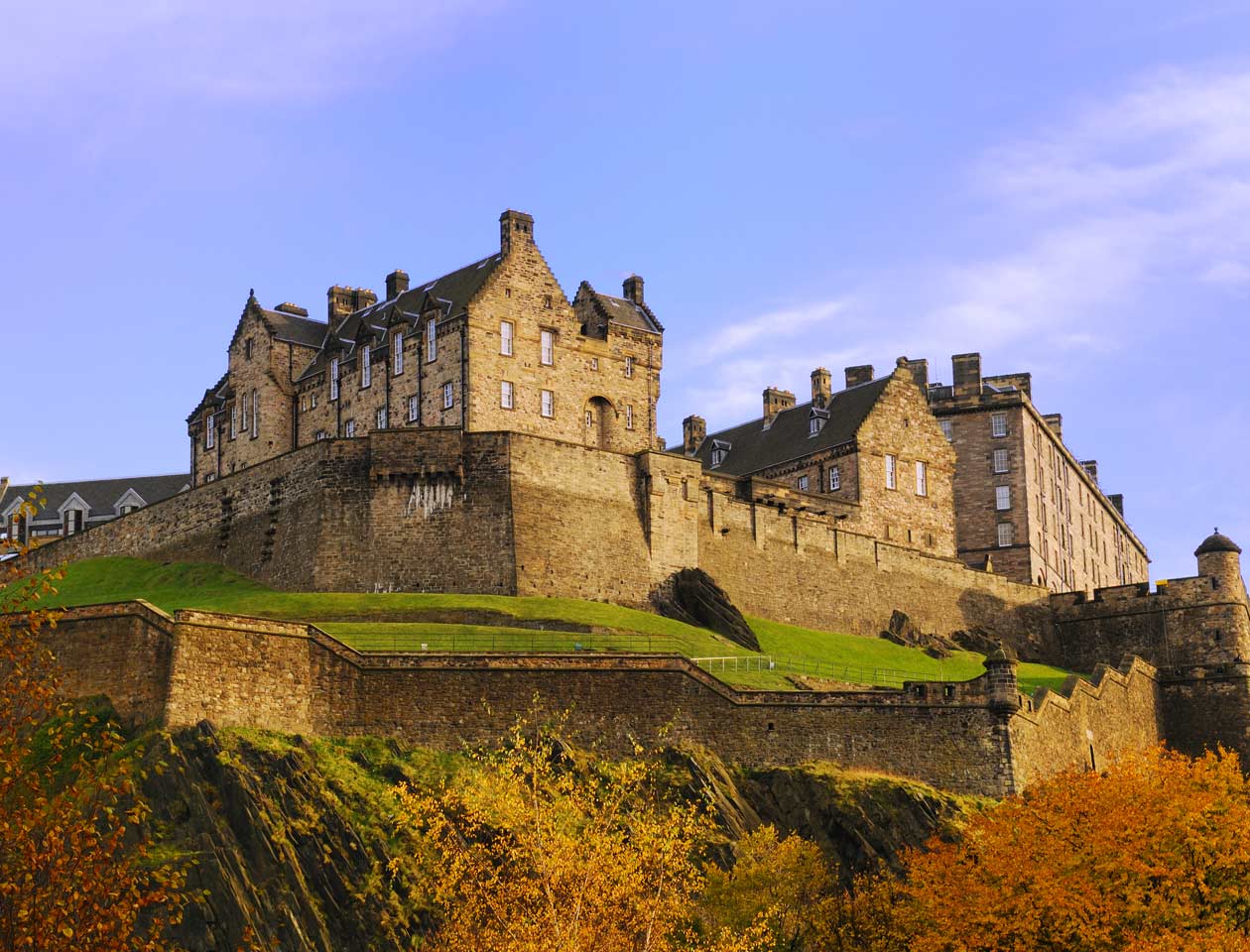
3. Edinburgh Castle of Scotland is located in the most haunted city in all of Europe, possibly the world. Deep in the depths of the Castle, dungeons and a labyrinth of tunnels lie beneath which were used for imprisonment and torture over the centuries. The vaults were once used to quarantine and entomb victims of the plague. Archaeological evidence points back to the Iron Age, so Edinburgh may be the longest continually occupied site in Scotland, making it for a popular ghost destination. Take one walk through cobblestoned Gothic and rainy Edinburgh and you’ll almost expect to come face-to-face with the paranormal.

3

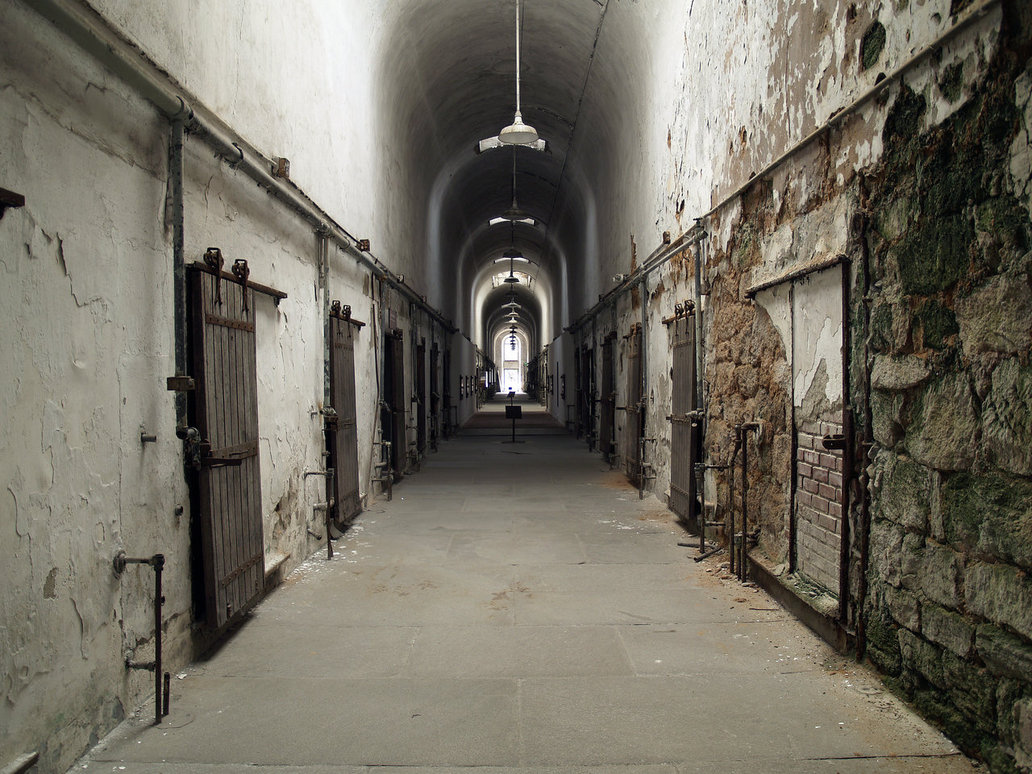
4. Eastern State Penetentiary in Philadelphia, Pennsylvania is considered to be the world’s first “true” penitentiary, built in 1829, which originated and encouraged solitary confinement as a form of rehabilitation. In true solitary confinement format, prisoners lived alone, ate alone, and exercised alone in individual yards. When an inmate left his cell, a guard covered his head with a hood so that he remained in confinement through and through. Although this system was abandoned due to overcrowding, it is widely believed to have caused mental illness among its prisoners. It operated as a regular prison from 1913 until its closing in 1970, during which time it famously housed Al Capone. After its closing as a prison in 1971, strange happenings started and never ceased to be reported from its stone walls.

4

5. The Amitville House in Amityville, New York is the famous site of the brutal family murder in which 23-year-old Ronald DeFeo, Jr. shot and killed his parents and four younger siblings on November 14, 1974. However, the real haunting started a little over a year later, when the Lutz family, knowing about the prior murder but choosing to buy the place based on its great price and upscale amenities, moved in and experienced subsequent horror. The Lutzes’  said they began experiencing strange things such as footsteps untraceable to any family member’s movements, mysterious and pervasive odors, green jello-like substances leaking from walls, toilet water turning back, swarms of houseflies and eyes peering in from outside the windows.

5

The Best Place I’ve Ever Been

Being that I spend a lot of free time scourging travel blogs on the Internet, there is one phrase that I often come across that really gets under my skin…

It was the best place I’ve ever been. 

Oh yeah, really? The best place you’ve ever been, huh? The most beautiful, fraught with culture and life, brimming with excitement hiding underneath the budding underbelly? Somehow, I doubt that.

Not that I don’t believe a place can be like that, because they are. And that may be the exact issue… that there are many places like this. There cannot be one best place you’ve ever been, because that’s like throwing every destination into prepackaged, nicely organized ribboned boxes, when let’s get real here, Seattle doesn’t have a whole lot in common with Sydney. More accurate phrases would be New Orleans is the craziest city I’ve ever been to. Paris is the most lovely and lacy city I can imagine. I’ve never had so much barbecue as I did in Kansas City. 

Image

I can’t really blame people though when they ask me what’s the best place you’ve ever been? because as a journalist, it is exactly these questions that must be asked, this searching for extremes, simply because we want to hear what the hell you can possibly say. On the contrary, being trained as a journalist, you learn to never yourself state these extremes, because you lose your credibility with these dramatic and overused phrases when you’re supposed to stay without a side at all times possible.

However, the way a person responds to these questions says a lot. But a quiet wonder, a shrug of the shoulders, a damnnn I really have no idea… Now it’s those responses I listen awfully closely too. Because those are the ones who have seen the world and live to tell it enough that you have to ask first.

Heart

I haven’t slept in days.

Night after night, I lie awake in the various beds that I call my stopping points in my never-ending pilgrimage across New Jersey, and although I wake up before the sun can be seen and I lie down long after I ever wanted to, I can’t get my heart to stop beating so ferociously although my eyes are begging it to just be quiet so that maybe, we can get to work on time tomorrow.

No matter where I was or what I was doing, the most fruitful sleeps that I remember are the ones where I worked alongside the world by day, exploring and smiling, whether it be in the sunshine or beneath a faded blue poncho. I think of running into the various places I called home after breathlessly working to open the locks, my friends and I stumbling through doorways and collapsing on unclaimed beds, so tired we could barely bear to put up our hair or take off our boots. These rests were the ones that only came after a day climbing up mountains, battling the rain, running from misfits, and doggy-paddling the Atlantic and dingy ponds alike.

They didn’t really have much to do with waking up to a blaring alarm, strapping on a pair of heels in the parking lot, or packing a lunch. It was those days, back in the day, where I don’t really remember feeling my own heart beating out of my chest, but instead I felt it blaring in my brain, saying, Wow, isn’t this place magnificent or How did we ever end up here?

Never in my life have I been so tired as I am these days, never in my life have I worked so hard to achieve a dutiful eight hours rest. Ironically, never in my life have I moved so slowly, either, and for the first time, I find myself trying to pull free the heart in it all.

Image

Take Cooler Travel Photos

If I have to see one more lopsided Facebook photo of you standing in front of a gum-stained, over-toured national monument, I don’t think I’m going to make it. And I highly doubt I’m the only one. So instead, here are some clever little tips in how to take cooler travel photos that make your friends say, You took that?! 

1. Don’t abandon your nouns. Instead of just snapping lots of pictures of the Ponte Vecchio, get some people in those shots. Dangle your legs over the sides. Get all of your friends to sit on the ledge. Just do anything so that there’s some life in those photos that consist of more than a pile of rock, according to the Independent Traveler.

2

 2. Get creative with your angles. You know what’s a nice picture? A pretty little front view of the Duomo di Milano. Too bad it’s the same shot that every one of two million tourists who visit each year have on their iPhones too. You know what a really cool photo would be? An up-close-and-personal shot of one of the 3200 statues that dot the Duomo. Don’t settle for a boring on-your-way out photo of a landmark that you’re lucky to see even one time. Try to get creative and think outside the box.

3. Play with the surrounding scenery. It’s important that your shot is filled with life, however that “life” doesn’t have to just be the subject that you’re trying to nab. Instead, think about the less glamourous and understated scenery that surrounds the area. When snapping a photo of the ancient River Street in Atlanta, Georgia, you don’t need to just include the grayed, decrepit buildings. Instead, a zippy, patriotic American flag brightens up the entire shot.

1

4. Don’t just snap and upload. You don’t need to take a bunch of random shoots and then thoughtless send them to the Book. Instead, get them on your computer, saturate the colors, crop out the junk, and delete the ones that didn’t make the cut. There is never a need to upload 600 crappy photos, since let’s get real here, the only person who cares to look at all 600 is your mom.

5. Don’t worry about the weather. Often, we think of the best travel photos around are those with the sun shining, the fluffy clouds drifting along. However, this isn’t necessarily true. Take advantage of interesting situations, including the weather. The pastel colors and bright jazzy colors come through nicely on a sunny day in New Orleans, but you know what’s even cooler? A sweet shot of one of the afternoon monsoons on Bourbon. Get artsy, people.

3