Movin’ To The Country

“If you go to Atlanta, the first question people ask you is, ‘What’s your business?’ In Macon they ask, ‘Where do you go to church?’ In Augusta they ask your grandmother’s maiden name. But in Savannah the first question people ask you is ‘What would you like to drink?’” – John Berendt, Midnight in the Garden of Good and Evil (1994).

And so, this is Savannah, Georgia for you. I would call myself a fairly seasoned traveler, I think– I have made my way around most of Europe, the United States, and ventured a little bit beyond. However, as much as I see, one part of the world that always baffles me a little is the outdoors lovin’, drawl speakin’, slow talkin’ South.

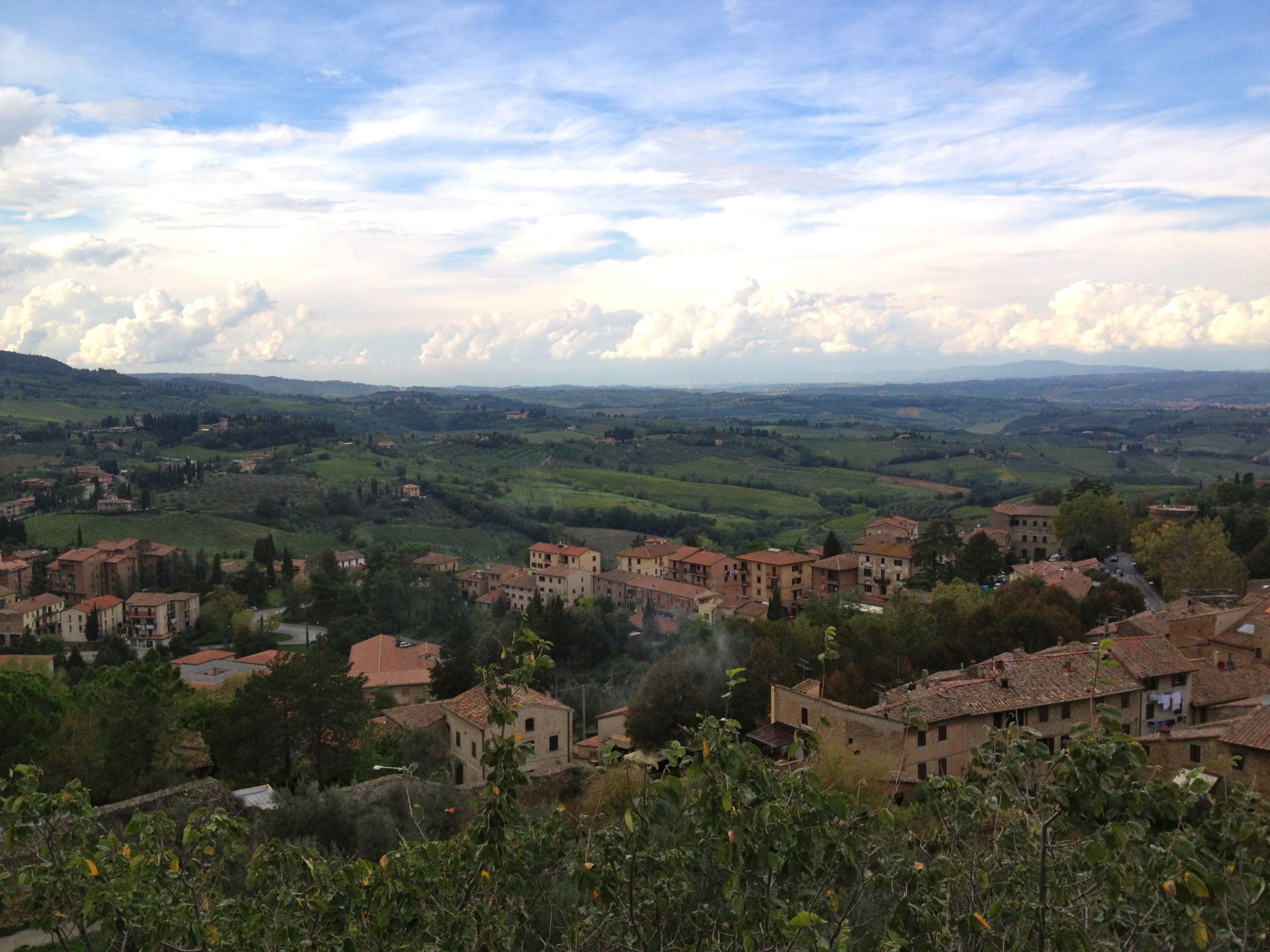
So, when my friend Dona and I ventured down to the Lowcountry for the week, the Hilton Head Island/Bluffton area, I jumped at the chance to visit Savannah, Georgia, for the day, a mere 20 minute drive from Bluffton, which is a small, cozy, and unappreciated town only about 20 minutes away from Hilton Head as well.

Palmetto Bluff

Savannah is basically a more tame New Orleans, which reminds me your typical Southern city gone rogue. If you’re into a slow-moving and historical city with a great open-container policy, then Savannah is made for you. However, it’s still worth a visit if you’re in the area, especially if you are familiar with Midnight in the Garden of Good and Evil, a novel by John Berendt chronicling the trial of Jim Williams taking place in the city.

Dona and I took an Old Town Trolley tour of the city, which is overpriced at $33 a pop, although the commentary is good and entertaining and the trolleys are efficient, coming by every ten minutes or so, even though they are advertised to take even longer. However, if you can stand the heat and the walk of the two-and-a-half mile historical center, the largest historical center in the country, then buy yourself a guidebook, skip the boring stuff, and do it yourself. Otherwise, you’ll be dropped off the designated stops with really no information in your hands.

Our first stop was the City Market, which is just a concentrated gathering of less-obvious tourist traps featuring candles, chocolates, Georgia peach sangria (do it; like I said, there’s an open container policy) and of course, Paula Deen’s restaurant and store, “The Lady and Sons.”

Paula Deen

The next drop-off point was Chippewa Square, which is where “Forrest Gump” was filmed, although the bench itself where Gump sits is now located in the Savannah History Museum, located at the edge of Savannah and where the Old Town Trolley tours begin. We didn’t visit this museum, however since I hate history I was perfectly content Googling screenshots of the movie and then figuring out where the bench was and just taking some cheesy photos from there.
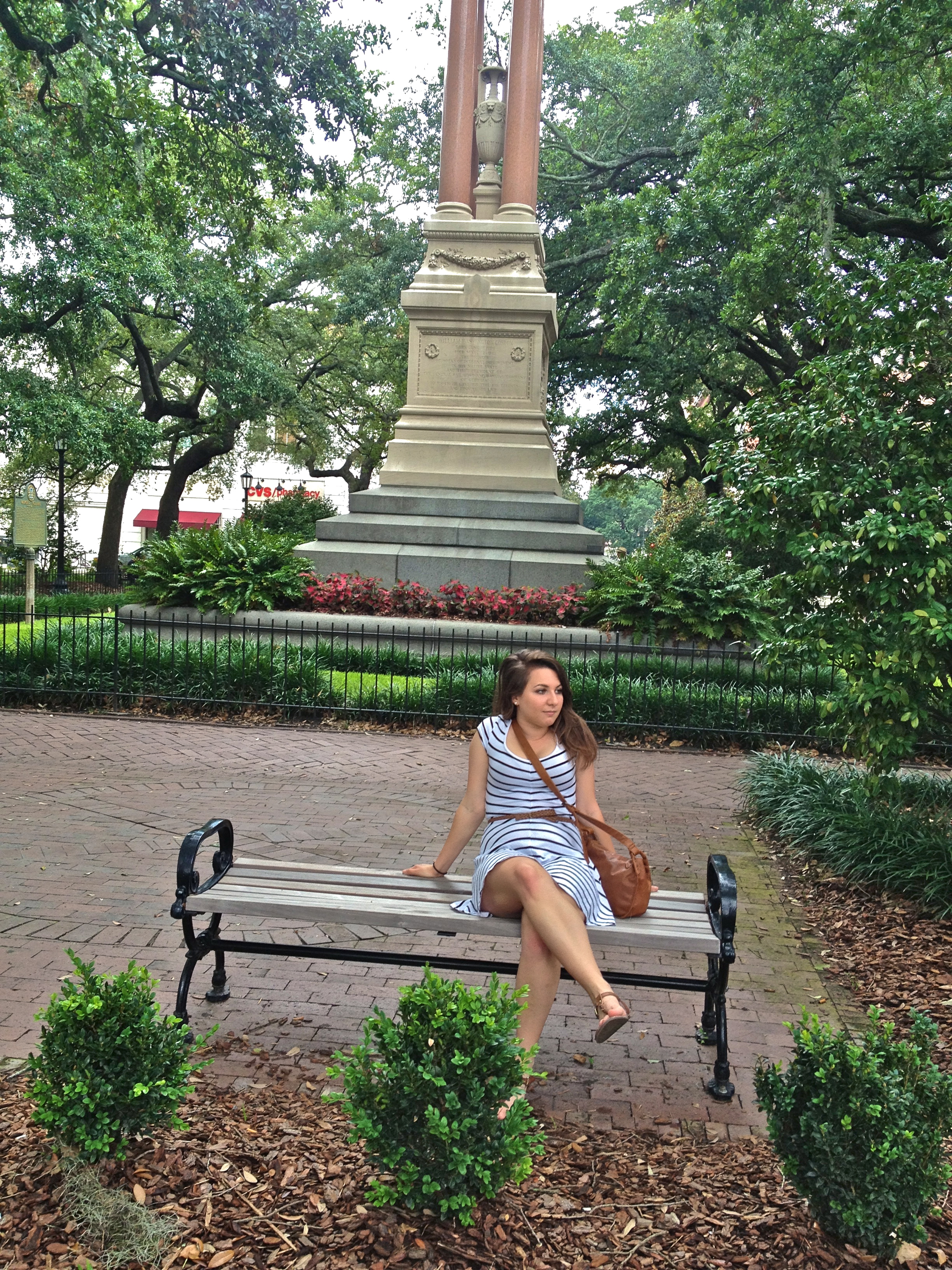
Forrest

On our way to get to the Victorian District, a handsome line of beautiful Victorians definitely worth a casual stroll for the sheer wow factor, we also passed the Six Pence Pub, where a scene of Pretty Woman was filmed.

And then, finally, the sight I waited my whole life to see- the Mercer House, the home where Jim Williams lived, and ultimately, died of a heart attack– in the exact spot where he allegedly shot his employee and also alleged, lover, Danny Hansford. The tour of the house is a little dry (and expensive, at $13), but for hardcore Midnight fans, it’s worth it just to be in the house and think to yourself, Jim Williams lived and died right here. And yes, you do go into the front sitting room, as well as the hallway and another two sitting rooms, as well as see some of his art and antique collection among the rooms. Don’t expect too much information about Midnight- the home is owned by Williams’ sister and clearly, there are orders to keep the whole crazy ordeal on the hush-hush.

If you’re still obsessed with Midnight, you can stop at the Telfair Museum of Art to see the Bird Girl statue, the famous statue from Bonaventure Cemetery outside of Savannah where the photo from the front of Midnight was taken. The statue was moved to protect the dignity of the graves surrounding it from the family who purchased it in the cemetery.

IMG_3851

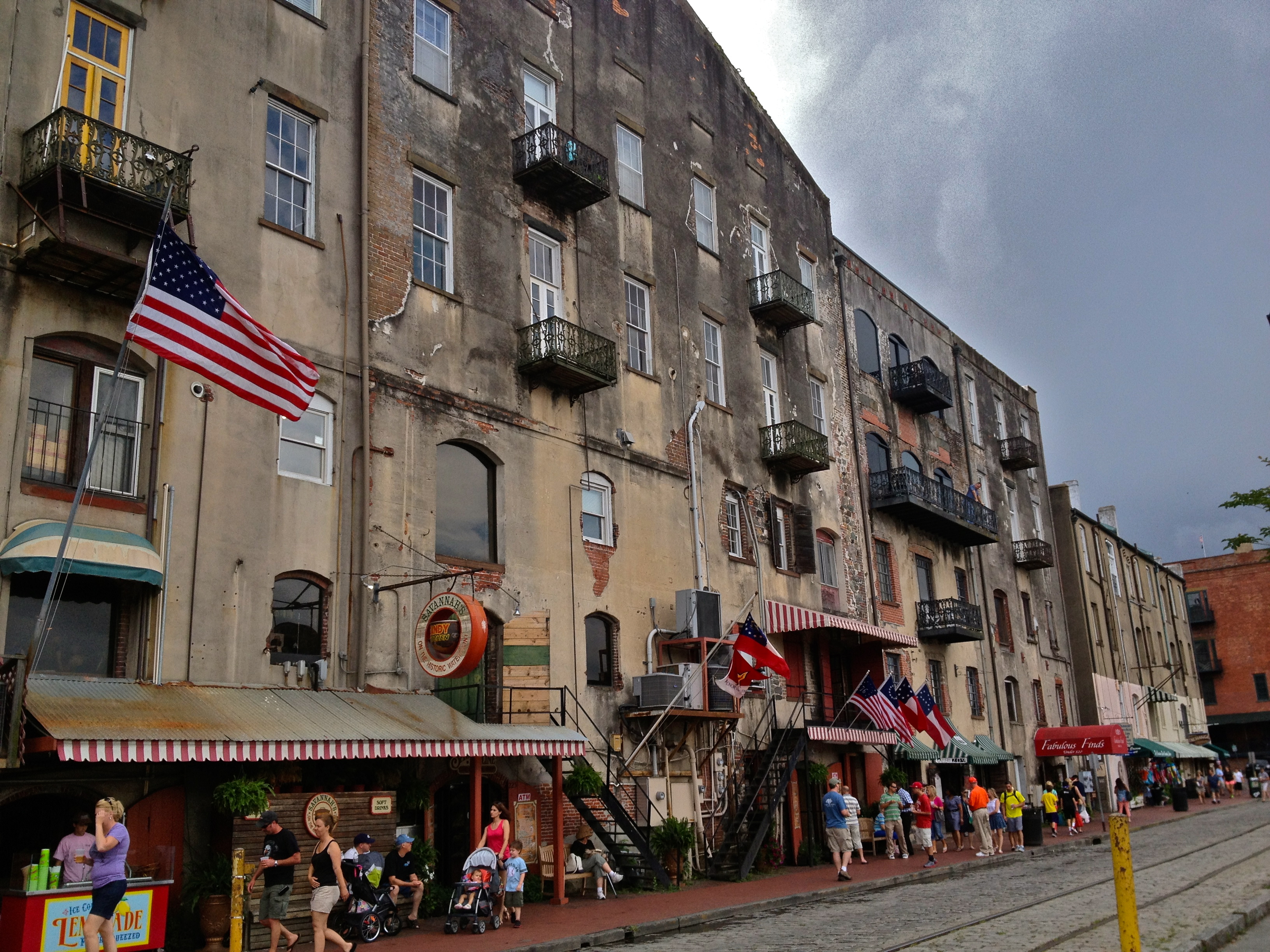
And, even though it’s also a huge tourist trap, stop at River Street just to stroll about by the river and look at the beautiful buildings and water, since all of the shops are really just overpriced t-shirt shops.
IMG_3853

My bottom line? Savannah is nice. It is. It’s a classic Southern town with beautiful homes and trees and happy people who like a nice sweet tea. However, unless you’re a huge history or Midnight buff, don’t go out of your way for a visit.

How To Not End Up On The Texas Chainsaw Massacre

Normally, I would happily hand over my cash to any airport for the sheer opportunity to escape a long and tedious car ride, because honestly, there is a special place in Hell for parents that force their children who already are arch enemies to sit next to each other in a smelly minivan for more hours than I would normally be asleep for. However, in my new post-grad status, there aren’t a ton of chances to drop hundreds of dollars on a trip when you can get in the car for a few hours and hand over forty bucks instead. As a result, my trip to Hilton Head Island with my friend took about 13 hours in the car, including stops, originating from New Jersey, which I’m really pretty proud of.

Anyhow, on this journey through the backroads of the South and abandoned highways (accompanied by abandoned cars, which is another thing entirely), I got to thinking about if I had been alone on this journey, as many people are, especially when they are college kids traveling back and forth from their colleges after being home for the holidays. And you know what? Driving by yourself must be friggin scary. 

So, after speaking to my adopted retired NYPD detective aunt (who I came to visit on this beautiful island), I have some tips to share with you about things to consider if you are driving for an extended period of time, alone or not….

1. If you will be staying in a hotel, opt to stay in a hotel that accepts pets. Why? First of all, people who have pets tend to be less likely to be serial killers. You don’t need a study to tell you this. And second, if people have pets, that means they will be walking outside from time to time to take their pets out, meaning that they will form a sort of neighborhood watch. Plus, since the hotel knows that dogs are gonna bark if they hear someone knocking, they, nor anyone else, is going to be knocking on your door.

2. If a “cop” flashes their lights at you, wait until you are on a main road to actually pull over. There have been cases known where people posing as cops pull you over on a backroad because they know that no one is gonna come by, and then they… well, you know. Will you piss off a real cop a little by waiting a minute or two to pull over? Yeah, maybe. Is it worth your life? Yeah, I would say so.

3. If you’re in a sketchy area and you get pulled over, ask to see a badge before full-on opening your window. Chances are, someone posing as a fake cop isn’t going to have a fake badge to accompany themselves; it’ll be a miracle if they even have a car that looks remotely like a cop car. And if they do, there is no feasible way for you to tell if it’s fake… so if they do, you’re shit outta luck. So if you catch someone without a badge and you haven’t opened your window yet and they have no chance of getting at you, you still have a chance to get away before they come after you. 

4. Have someone call you at designated times to check up on you. Your mom will most likely do this anyway, let’s be serious. But even if it’s only once every four hours, at least the person calling you will know that you will be available at that time and if not, then yeah, there is a problem and a little search may be in order.

5. If you have to stop your car for whatever reason, pull a little off the road so no idiots hit you. This is literally so easy but no one follows it. I constantly see people who pulled off the road (if their car just broke down, then obviously they have no choice…) who are barely even off the road so if someone just isn’t paying attention, they could ram right into their car. Just pull over!!! And for Christ’s sake, turn your hazards or your lights on!!! I know they look dumb, but you know what looks dumber? A bashed in car.

So there you have it. Follow these basic tips to ensure your safety on those long rides. They’re really not even hard and your mom will be proud and you can still eat all the fast food you like, I really don’t even care. Just try not to die. 

Image

Wine Country, USA

Yesterday we enjoyed a relaxing, sunny afternoon in beautiful Wine Country, sipping on whites and reds while sampling fine cheeses before taking an outing through the vineyards lain across the rolling green hills without a care in the world. Tuscany, you may think? Maybe Napa Valley? Oh no. We were in scenic Pittstown, New Jersey, located in northwest Jersey just a little bit off of the beaten path.

At first, the idea of visiting a winery, a beloved and precious place that now makes me think of Italy in the way that tattered old photos make you think of your angelic passed dog, made me wonder if I could even take it, if I could enjoy a place that was so magnificent across the Atlantic but seemed like it could only be a cheap and sad imitation in the US of A. And to be honest, it actually wasn’t half bad.

Tuscany

Beneduce Vineyards was one of the few wineries in the area I was able to sniff out that wasn’t an obscene distance from my house in the Middle of Nowhere, New Jersey (only about 45 minutes away) and had a pretty down-to-earth deal concerning wine tastings and tours and such, because let’s be honest, you can’t drive that far just to gulp down some wine. Unlike many other wineries I was looking at, you didn’t need an appointment to come to a tasting or 11 other people or an extra $150 bucks.

Instead, for $10 and from 12:00 pm to 6:00 pm on Sundays, my boyfriend and I sampled a pretty humble amount of four different wines, which I guess I couldn’t complain about for $10.The girl at the desk who poured each wine for us had a pretty extensive knowledge about how each was made and bottled and the quirks and its appropriate pairings. Which was made even better because with the four wines, we received some meat and cheese, which we maybe sort of substituted for lunch that day. Whoops.

Beneduce Winery

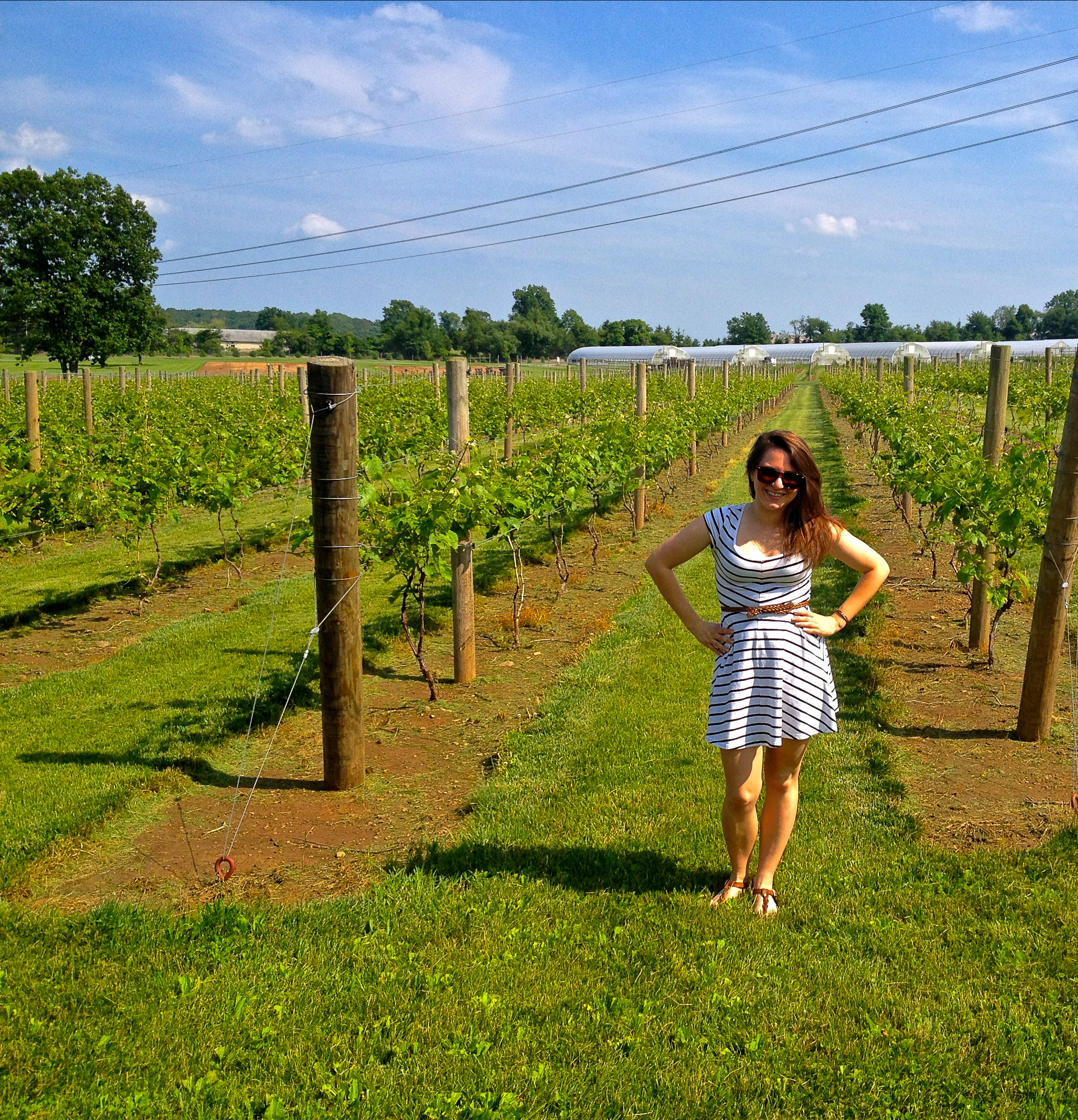
After the wines and the free glasses we received with them and the food, for some odd reason, the workers at Beneduce Winery then handed us over some keys to their golf carts to cruise their winery on their own doing. They offer a tour by one of their own workers, but I think everyone felt the same way as we did (who needs a tour of a vineyard?) because as we were cruising around in a semi-drunken stupor (after figuring out how to drive the cart, which they don’t bother telling you about either) we saw many other yippity groups giving themselves tours (AKA going as fast as they could in a golf cart without running over any plants).

Cruisin

Mostly, the vineyard part is just a nice photo op, since without someone telling you about each one, the only info is a sign saying what kind of grape each plant is. It’s still fun to cruise around in a real live vineyard, and maybe stop at the hammock on the outskirts too for an afternoon nap. Hey, why not?

It may not be my beautiful Tuscany. It may not be France or Napa or any other places that house wine country. Jeez, it’s just New Jersey. But I think there is something to be said for finding gems in your own backyard. It doesn’t require a full wallet or a plane ticket or a pompous sense of what’s high class. All you need is a little research to see what’s hiding right before your very eyes.

Photo Ops

The City of Brotherly Love… and War

Philadelphia is an interesting city, to the say the least, in the fact that besides being the birthplace of America, it also remains a hub of activity and rebirth in the country.

Thankfully, this is a point that remains true as it is the center of the Northeast Regional Honors Conference this weekend, where Honors students from all over the country gather to do a whole mess of things. Mostly, we discuss ideas for our Honors programs, we discuss academic ideas, we talk about life and we run amok around this city, and whatever other cities in the past and coming years that we get the opportunity to be sent of, luckily free of charge for some of us thanks to our generous universities.

What’s really cool about Philly is that it’s a combination of Old City, where our former presidents gathered to assemble this country (whether or not they would be satisfied with the results now is not applicable) and this paired with the People, who today, as a main city in the Northeast, are innovative, not afraid to be themselves, and not afraid of anything, really.

Tonight, this worked against Dr. Lucy Kerman, Keynote Speaker for the NCHC Conference and Vice Provost for University Partnerships at Drexel University. I really hate to put words in her mouth here without too many direct quotes, but I’m going to try to paraphrase her presentation the best I can for argument’s sake and quote where possible. (Audio will be posted when it becomes available).

According to Kerman, universities are not civilly active enough, in part at the fault of their students, their customers, really. It is because of these students that residents in low-income housing are forced to deal with their childlike shenanigans because these “middle class white kids” “stay up till 3:00 am having parties and being loud and drinking” and they live in “converted family homes that now illegally house six white middle-class students.” In part, it is to the fault of these students that crimes occur in the first place because “they walk home at 2:00 am with beers and their iPhones.”

Mad? Oh yeah. Us too. Keep in mind as well this isn’t your 95-year-old neighbor complaining about those damn loud kids interrupting her sleep at 8:00 pm. This is a Vice Provost at a 122-year-old University speaking who oversees about 22,000 students.

Now, let me move onto her basic point, unfortunately hidden behind a singularly faceted utopian “solution” to a problem with multifaceted causes; that universities need to funnel their money back into the community by sending students out to use their skills to help by sending them in to design storefronts, employ low-income residents with “no skills” (good luck with that one), make sure that playgrounds are safe, and improve drainage. Not too shabby, right? Especially considering Drexel, who formed this “universal” model, also received a ten million dollar grant to implement this. Must be nice.

Unfortunately, putting every student into a single pool where all of our mommies and daddies can shell out $57,000 to $60,000 each year (the range of tuition at Drexel University including education, room and board, and meal plans) is probably not the best idea. In reality, who is at fault for students being thrown out into on-campus housing where they “damage” the community? Is it, as Kerman stated, “the investors who buy the housing and charge low prices to attract students” to make a profit or is it because university housing can literally be double what students will pay to live off-campus?

We’re not choosing off-campus housing because we enjoy irritating residents or because we want to run around these particularly dangerous streets, especially in some parts of Philadelphia Kerman was particularly referencing, in a drunken stupor. It’s because we are broke as hell, because American universities have become businesses before places of education, where you either choose a university based on the scholarship you receive or you graduate, unemployed, with 200k in loans. Also, as an FYI, 135 nations out of 196 in the world employ free post secondary education to citizens. America, obviously, isn’t one of them.

An interesting point was also brought up by an administrator who mentioned that yes, 20 years ago, her argument could be a valid one, where parents did shell out money for spoiled college kids. Many of those kids didn’t work multiple jobs or pray that they would even be employed within one year of graduation or even get social security when they hit 65. These weren’t problems then. However, 48 years ago, we segregated schools based on race. Years go on. Things change. I would hope a Vice Provost could acknowledge that in a speech she is giving in 2013, where the financial crisis has cost America, as of now since 2008, 22 trillion dollars.

I’m also a little confused on what the separation is between a student resident in a community and an employed “adult” resident. Legally, what is the difference here? I would seriously love to know. What gives someone else more rights than me to live in a city? Because I’m 22 and you’ve seen National Lampoon’s Animal House too many times?

Also, it must be considered that those coming to universities with comments the most are obviously always going to be those with complaints. How many times has your neighbor said to you “Hey, thanks for not being annoying last night”? Instead, it is the negative that will always be brought to attention over the positive, a very simple logical idea that has been forgotten with a Vice Provost with a Ph.D..

I guess I missed the part where every student in America became a “middle class white kid” (her words, no but seriously) when instead, as I had observed, almost every college student I know works more than one part-time job, literally works 15 hour days when you factor in school, work, and extracurricular activities, and will still graduate with loans they will pay off until they’re 40…. When they will then attempt to send their own kids off to school. Maybe instead of trying to force broke-ass college students who sometimes commute upwards of two hours a day in total to and from college because they can’t afford room and board, highly paid school administrators pointing the finger, as our dear Kerman here, can redirect some of their own dollars to the problem.

As much as I was horrified during this discussion to see a Vice Provost so unbearably out of touch with one of the most obvious problems of American education (the rising costs of tuition and the inability of students to change this business-education model) I also breathed a sigh of relief when I saw a ballroom full of 20-year-olds who don’t even hold a college degree yet up in arms and willing to stand up and face someone who stands tall at her podium with her PowerPoint clicker and ask her how she can expect students to be civilly active when she depicts this “demonic caricature of students,” as Aziz Mama, Monmouth University senior, asked Kerman. They weren’t afraid to say This isn’t right, and you will not offend me and disregard me as another cash cow.

It is this attitude, I think, that envelops and defines Philadelphia; a city that will listen intently to the words you have to say, fight against you with all it has, and vow to be more different and more worthwhile than you ever imagined.

Whatever Happened to Predictability?

Yesterday when we embarked for our third and final day of exploring of San Francisco, we nervously looked up at the sky and saw the ominous dark clouds overhead, pitting the city into a field of fog. However, this is just another typical San Francisco move— looming black clouds threatening rain with no follow through. Thank God.

We hopped on a bus and headed to Haight-Ashbury, a neighborhood in west San Francisco that borders the Golden Gate Park which boasts the center of the 1960’s counterculture movement, complete with skateboarders, dreadlocks, colorful murals, deadheads, and the odd scent of a certain herbal substance.

Haight-Ashbury

I was skeptical about what this neighborhood would really have to offer—would it just be a series of cheap vintage shops, where tourists gathered to buy Ben and Jerry’s ice cream and California themed bongs? Actually, no.

Haight-Ashbury, named for where Haight and Ashbury streets meet, is a real-deal neighborhood, equipped with colorful Victorians, hippies painting children’s faces, men holding hands, and long-haired kids in their windows waving and laughing. This isn’t just another tourist destination; it’s a real little Narnia that houses the same people it did back in the 1960’s, with the same people who wished they were living in vans like their parents did.

Unfortunately, my handy guidebook really didn’t specify any specific locales in the neighborhood, so we just wandered a little, missing some big spots like Jerry Garcia’s house (but we did get ice cream…obviously). And since we were nearby anyway, we walked a few blocks north to Alamo Square, where the Painted Ladies reside.

The Painted Ladies are that row of colorful Victorians you have seen on postcards; which is the biggest hub of the 19th century homes in the city. It’s worth it to climb the massive hill of the square to have the greatest view of the homes, which unfortunately do not include the Victorian in Full House, although the hill is the same one that the Tanners picnic on in the opening scene. My life is a lie.

The Painted Ladies

After Alamo Square, we had these great tour-quality expectations of walking to the bike shop at the start of Golden Gate Park to the east to ride to the Golden Gate Bridge a few miles away, but this may have been slightly optimistic since half the group couldn’t ride a bike, it was freezing cold, and it was 5:00 pm. Whatever, I tried. Instead, we took the inconvenient route of bus 71 to bus 28, the only line which goes from Golden Gate Park to the Golden Gate Bridge.

During this long, smelly, and crowded public transportation ride (#firstworldprobs) we were all seriously wondering if this was really gonna be worth it. Screw the bridge. I hate this bridge. I can’t bike to it and it’s friggin cold and the Bay Bridge looks kind of similar anyway, right?

Wrong.

Seeing the Golden Gate Bridge reminds you of where you really are. Haight-Ashbury, cable cars, Chinatown, Pier 39, and Fisherman’s Wharf really are, yes, real San Francisco. But who can resist such a famous trademark such as that of the Golden Gate Bridge? It may just be a really big red manmade structure at first glance, but really, it’s more than that. It’s the final mark of a great city, one that has flourished for years, one that has been the epicenter of life, change, and revolution. It’s the last capische on an Italian dish in North Beach, the soy sauce on Chinatown lo mein, the last hump when the cable car hits Lombard Street. The Golden Gate Bridge might as well be the cherry on the whimsical sundae that is San Francisco; always saving the best for last.

Golden Gate Bridge

The City by the Bay.

After rendezvousing through Chinatown, we hiked down Market Street once again to the corner of Powell street, where the cable car, the only National Historic Center icon that is mobile, picks up its passengers to take them up the famous hills and to the Bay, where Alcatraz and Fisherman’s Wharf lie. Apparently, the reason San Fran loves cable cars is because back in the day when horses would pull people up the hills, some of those poor ponies toppled down the hill with the carts and people attached. Ever since, cable cars have been the go-to mode of transportation around here.

San Franciscans seem to treat the cable cars like their own cheap taxis, and to them, it’s no big deal to hold on and hang off the side as the cable car winds up the hill like a teetering roller coaster for only six bucks a pop. For the rest of us tourists, we were left sliding back on the benches, holding on to our cameras for dear life.

When the cable car stopped, we got off at Lombard Street, known as the crookedest street in the world. So crooked that it has to zigzag across the hill, which is dressed up with pretty mansions and manicured flowers. After trying to navigate down the street hillside, we wandered down past the old Victorians and followed the Bay in the distance to Fisherman’s Wharf.

Lombard Street

Fisherman’s Wharf is like a more old-school and genuine version of Point Pleasant, New Jersey, minus the dumb carnival games and unenthusiastic teenagers selling air brush tattoos. The beginning of the Wharf is lined with seafood shops, where you can get fresh shrimp sandwiches for five bucks from a stand and you can walk along the water and by the five-or-so piers that dot the water. At the edge, you can see Alcatraz Island and the Golden Gate Bridge, lit up when night comes along.

Alcatraz Island

We also stopped at Musee Mechanique, a classic game arcade with games as old as from the 1800’s. The games feature machines where you put in a quarter and see puppets dance or carnivals light up and move and “x-rated movies,” where a man puts his arm around a woman. Ah, the days.

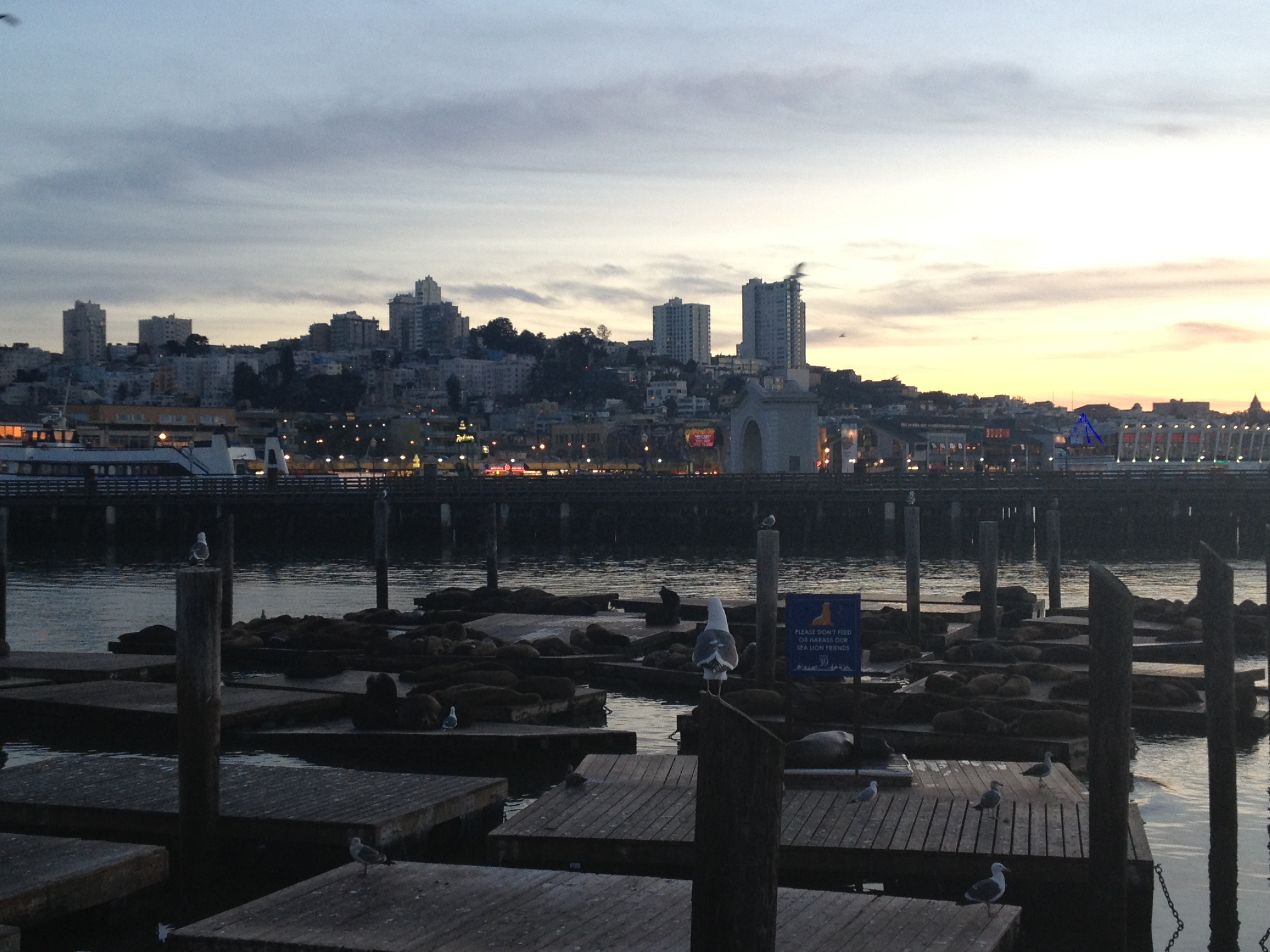
Down Pier 39, we spotted the sea lions all laying about like sleepy dogs, barking at each other and enjoying the warm weather as they sunbathed on the rocks. Wandering into the middle of the pier, you can ride the carousel, see puppet shows, and literally eat the best salt water taffy of your life.

Pier 39

Unlike many other “famous” cities, this place doesn’t reek of tourism in the slightest. Instead, to me, it has the scent of locals making their living selling freshly caught fish and people kissing in front of the Golden Gate before strolling to Pier 39 for candy. Not a bad life.

The Town Within the Town.

Yesterday, I took my study-abroad self-touring skills to the test and, equipped with a map and a 2011 Frommer’s guidebook I got for four bucks on eBay, I somehow convinced everyone to trust me enough to let them allow me to lead them around this wondrous little city.

First, we all headed off to Union Square, or what we thought to be Union Square. Union Square in itself, was, or so I thought, little more than a commercial hub where stores like Saks Fifth Avenue, Juicy Couture, and Coach were gathered about for rich citygoers and tourist moms to stop by when they got bored of sightseeing. However, today I quickly realized that in actuality, Union Square is a physical green square, as it appeared on my map, where a few restaurants line the grass and artists gather to showcase their abstract works.

Anyway, quickly bored of Union Square, we walked the few blocks up Grant Avenue to San Francisco’s Chinatown, where one of the largest Chinese populations outside of Asia harbor. After walking through the touristy Chinese gate right on Grant, we walked down the avenue and in and out of the many clothing stores, kite shops, and tea stores. Around the streets, even on structures such as the Bank of America building (ironically enough) you can see all sorts of Chinese architecture trademarks such as gold dragons and peaked tops. It’s kind of cool too that it’s clearly not just a tourist attraction- Chinese people are all over the place; walking with their children, playing music, manning their shops, eating their lunches in the park.

Image

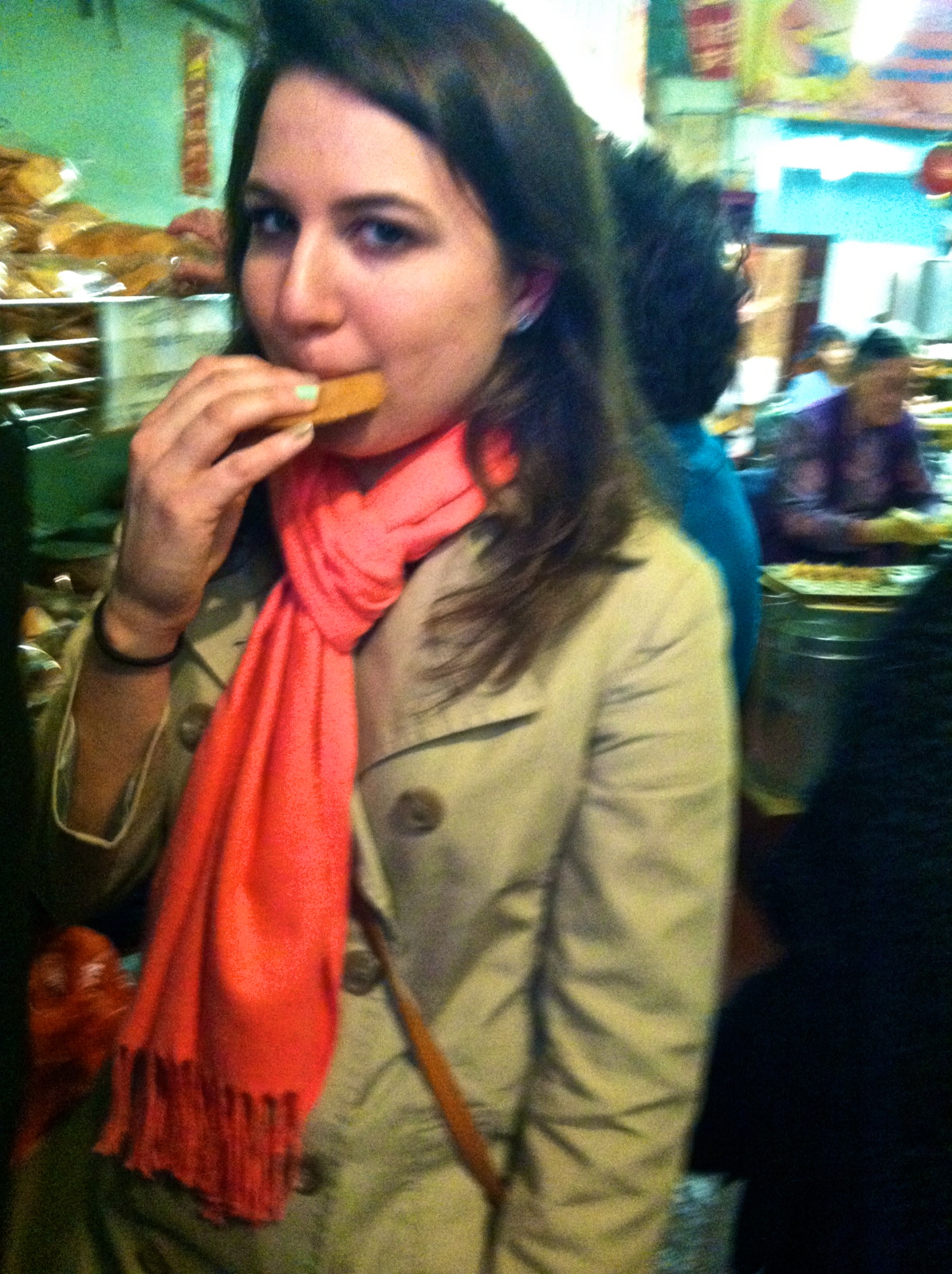
Once again, being shocked that anyone chooses to listen to me, I followed my guidebook in bringing everyone down a sketchy alley to the Fortune Cookie Company, so Frommer’s instructed me. The alley smelled like dead animals and flies swarmed the place where most of the shops were barred up. Even still, it gave me some hope that although no tourists were around, Chinese people were still walking up and down the alley like it was common traffic.

The tiny sign that read Fortune Cookie Co. was just as little as the shop itself, which felt pretty full with the machinery lining the floors and three little woman sitting in a corner, folding fortune cookies and placing fortunes inside.

Image

After we escaped the alley, we strolled down Stockton Street, which is supposed to the main food market full of things like armadillos, frogs, and other not-so-appetizing creatures. However, this seemed to be pretty empty to me, mostly just stuffed with more tourist shops.

Even still, Chinatown seems to be its very own locale, located within San Francisco even if only by name. The few streets it takes up seem to have residents that have no reason to leave. Why bother when everyone you need is already in picturesque San Francisco?

Image

Look, it’s the Golden Gate!

….oh wait. JK.

So before we were all positive that we saw the Golden Gate Bridge, we joined together as our group of 13 and hiked down Market Street, the main hub street of San Fran, to the Ferry Building and the Ferry Building Marketplace, which lies at the foot of the bay. This is probably one of my favorite parts about San Fran– you have this bustling city, joined together with only a few blocks in between to a laid-back and salty water.

In the Ferry Building Marketplace, there are tons of little shops filled with wines, gourmet cheeses, ice cream, and obviously… seafood. Most of these humble seafood stands have lines running out the door, with people already crowding the bar and loading up on happy hour oysters and Anchor Steam beers. Most of them still have their suits out, fresh out of their 9-5 jobs, never bothering to waste their time staying late than so many of us force ourselves to over in the tri-state area. When you walk through the Marketplace and stand out on the boardwalk next to the water, the salty winds kind of getcha for a moment before you spot the Bay Bridge hidden behind the countless ferries and people that are loading up for Oakland across the water.

The Bay Bridge

The Bay Bridge looks kind of similar to the Golden Gate Bridge from afar (well, as far as I can tell as of now) and lights up at night with lights made to look like waves, lighthouses, and gulls flying across. From our sketchy Asian seafood joint on the water, this was a welcome surprise as I enjoyed my red snapper dinner.

Red Snapper

Nobody was lying to you when they said that the weather in this city literally changes at the drop of a hat. During the day, as you walk around, you’re wishing you brought flip-flops but as soon as you walk a few feet closer to the water you’re wondering why you didn’t bring your North Face jacket.

I don’t know what it is about this city that makes it so uniquely American; whether it’s the salty sea air, the happy little ferries, or the fact that it’s the birthplace of many important American moments. It’s also distinctly different from the warped land we live in back near New York City— here, it’s like time has stopped, where people still enjoy their boardwalks and their families and having a nice run down the water, where the only thing anyone is every in a rush to do to get some of that fresh seafood that floods the place. Whatever it is, it easily gives you a new appreciation for the country you live in. The East Coast doesn’t have a damn thing on this place.

The Guy Next to Me Smells Kind of Funny.

I could sit here all day long and tell you why I think it’s cool to get involved in school activities. I could tell you about how there are lots of unexpected perks, like meeting hot boys or networking with distinguished administrators or going to shows or getting free food. But I’m going to go out on a limb here and assume that the very best way to convey how friggin sick school activities are is to tell you that right now, I am on an airplane to San Francisco, California with 12 of my best friends and the only money I’ll be fronting all weekend will be the dollar postcard I send to my mom.

Here’s the deal- the University newspaper that I work for, The Outlook, makes money through advertising within the paper, so as long as our advisor approves it, we all get to go to the Associated Collegiate Press (ACP) conference each year. Lucky for us, they always pick pretty sweet cities to go to; we have gone to Phoenix, Arizona; Los Angeles, California; Seattle, Washington; and today, we are going to San Fran. Hell. Yes.

Image

Family travel goes kind of like this: Mom and Dad buy the kids tickets. Mom bothers you to pack enough underwear and she makes you soggy sandwiches because airport food is pricey and then you have to share the room with these three other people whom you don’t really like very much and you usually end up having to pose for a lot of unflattering pictures, one of which will, undoubtedly, end up on your Christmas card.

However, student travel goes a little more along these lines: I sit in Business Law class till 12:45, wondering why the hell I haven’t packed yet when I have to be back at school to roll out at 3:30. I excitedly tell the girl next to me who I don’t really know very well that in a few hours, I’ll be in the City by the Bay. When I get home, I throw my stuff in a bag and I don’t have to listen to my mom telling me I really don’t need that many clothes (um, shut up mom) and then I run rampant with these 12 other nutjobs until we finally get on the plane, where my friend Nick comes up to my row and says, “Dude, the guy next to me… he smells sort of funny.”

One of the coolest parts of student travel is this—you’re not with a bunch of washed-out adults who jadedly see every super-cool city as been-there, done-that. Instead, you’re with a bunch of other kids, just like you, who seriously cannot believe they got so lucky to be here right now and with as excited as you all are, you could be going to damn Narnia. This is the joy of being young- to see everything as an adventure, because everything is.

I’ll only be here for four-and-a-half days, including travel time. But when you’re a kid with a backpack, equipped with plenty of underwear and lots of other people who are just as interested in finding the dollar oysters, taking a picture in front of the old Victorian in Full House, riding a cable car, and getting scared silly at Alcatraz (or is it Azkaban?) these 108 hours seem like the perfect amount of time to stay away for.

Cruisin to Asia

Istanbul, Day 3 

We wake up early (ugh) and unfortunately, the power is out in Chill Out Cengo (double ugh). I figure I’ll just rough it and go for the cold shower, trying to think about how much better I’ll feel being clean for the whole day instead of cold for a few minutes. Now, I’m not sure which would have been worse, since it was so cold I basically spent the day covered in soap after showering in a Hostel film-esque shower by light of my cell phone.

But anyway, a shuttle comes to pick us up to go on a boat through the Bosphorus Channel and the Black Sea to Asia after we fuel ourselves with Starbucks (again) and I sit next to a rando on the shuttle, who proceeds to tell me about how in Egypt, she is a tv broadcaster and has her own talk show. She tells me all about my sign as an Aquarius and gives me her email and tells me that if I come to Egypt, I better give her a buzz. Not a bad deal for a 20 minute bus ride.

When we get to the coastline, we get on a ferry which takes us to Dolmabahce Palace, a majestic and jeweled-out palace that I should be appreciating but really I’m just tired as hell. The views aren’t too shabby from the coastline though, and I can imagine why the sultans didn’t want to leave. Too bad all I can think about it ZOLTAN!

ZOLTAN

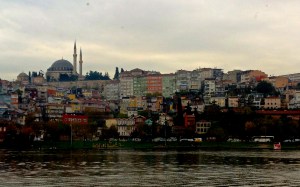
After we get back on the boat, we get another traditional Turkish meal as our ferry sails over to the Asian side of Turkey, a country that is split on part Europe and part Asia. We don’t do much on the Asia side, basically just get harassed and eat waffles, but whatevs I went to Asia!

Asia... NBD. I'm a boss.

On the way back, we stop at the Maiden’s Tower, a tower that overlooks the city. It was built because a sultan got a fortune that his daughter would die before her 18th birthday by being bit by a snake, so he locked her up in the tower until her birthday. When she turned 18, to celebrate, he came to free her and brought a big basket of fruit… in which a snake had snuck inside and bit her as it got inside the tower.

Later that night, we run through the rain to get to where our pub crawl meets, a weird hodge podge of people that includes us (already a weird mix in itself), a 40ish computer program from Seattle who insists he doesn’t have a job because of the “caste system,” an army medic stationed in Naples, and two girls from Amsterdam who are clearly already wasted. Plus, of course, the leader of our pub crawl, a dad-aged Turkish man named Ali, comes with us and feeds us shots, who turns out to be the best dancer of all. Guess some things don’t fade with age.

Being out and about in Taksim Square is a funny thing. Sometimes you hear American music and you dance along, eager to have found a piece of home. While other times, much like being far from home in the first place, you hear something quite different and you just go with the flow.